

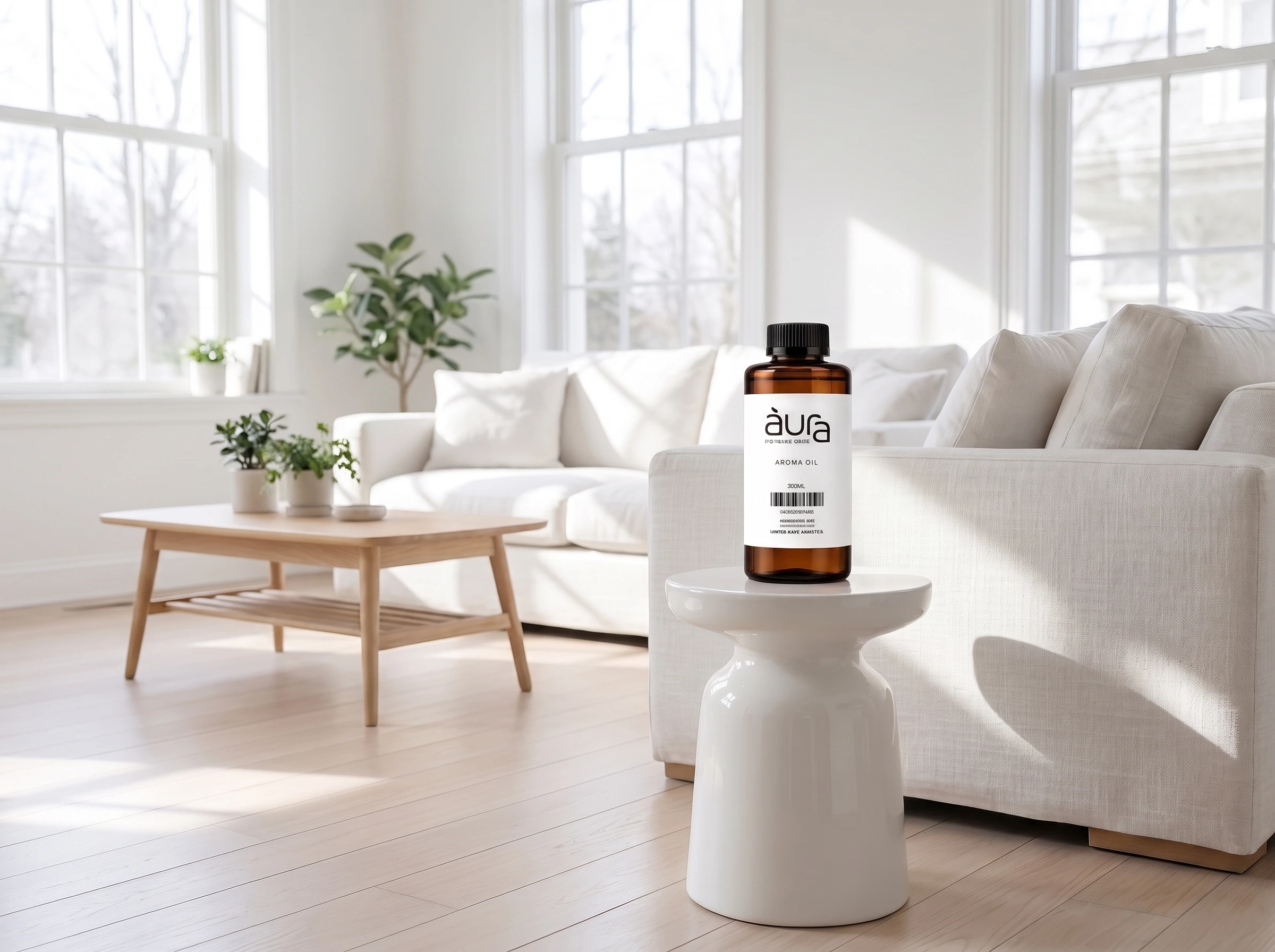
Some homes have a smell you remember years later. Not a strong one. Not a smell you could describe accurately if asked. But you would know it immediately if you encountered it again somewhere else.
That is a signature scent, and in almost every case it happened by accident. A particular cooking pattern, a specific detergent, the wood of the furniture, the neighbourhood air.
Building one deliberately is a different proposition, and it requires understanding why the accidental ones work.
Why accidental signature scents form
The mechanism is repetition, not intensity.
A scent becomes associated with a place when the brain encounters it in that place consistently, over a long enough period, in a wide enough range of emotional contexts. Ordinary evenings. Arguments. Guests. Illness. Celebrations.
That breadth is what makes the association durable. The scent is not linked to one feeling. It is linked to the place itself, which means encountering it later retrieves the place rather than a specific memory.
A home that smells of one thing in winter and something else in spring never builds this. Neither does a home where fragrance appears only when guests are expected. The association needs the fragrance to be present during the unremarkable hours, which is most of them.
Choosing what the signature should be
The instinct is to pick a favourite. That is the wrong criterion.
A signature scent will be present in the background of your life for years. It needs different properties from a fragrance you enjoy encountering occasionally.
It should be quiet enough to live with. Something striking is exhausting at permanent presence. The scents that work as signatures tend to be ones people describe as warm, or clean, or comfortable rather than as beautiful or interesting.
It should sit outside the obvious. A signature that matches what half the neighbourhood uses will not function as a marker of your specific home. Distinctiveness matters more than sophistication.
And it needs to work in your actual conditions. A profile designed for temperate interiors behaves differently in a sealed UAE apartment with air conditioning running through the year. Some fragrances that read as fresh in cooler climates read as thin here, and some that would feel heavy elsewhere sit correctly in this environment.
The Gulf advantage
This is the part where UAE homes have an unusual head start.
Gulf fragrance tradition already operates on the principle of signature scenting with diffuser aroma oils. Households have had characteristic bakhoor blends for generations, chosen deliberately, used consistently, and recognised by anyone who visits regularly. The concept of a home having its own scent identity is not new here. It is inherited.
What is new is applying it to continuous ambient scenting rather than to occasions.
The materials help. Oud, amber, resins and oriental blends have properties that suit a signature role specifically. They are complex enough to remain interesting after months of exposure, warm enough to work as background rather than statement, and culturally resonant in a way that makes them feel like home rather than like decoration.
A signature built around diffuser aromatherapy oils in the Gulf tradition tends to hold up over years better than one built around lighter contemporary profiles, because the complexity gives the nose something to keep noticing.
Consistency is the hard part
Choosing the scent takes an afternoon. Maintaining it is where most attempts fail.
The failure pattern is predictable. Enthusiastic use for two weeks. Occasional use for a month. Then a new fragrance appears because the first one stopped being noticeable, and the process restarts.
The stopped being noticeable part is worth addressing directly, because it is not a sign the scent stopped working.
Olfactory adaptation removes constant stimuli from conscious awareness within fifteen to twenty minutes. Your own home is the space you are most adapted to. You will stop consciously perceiving your signature scent almost entirely, and that is precisely what a signature is supposed to do.
The people who notice it are the ones who do not live there. Your guests. Your family visiting. Anyone arriving from outside. And you notice it too, but only when you return after being away, which is when the association does its actual work.
Changing fragrance because you cannot smell it anymore is the single most common way a signature never forms.
The practical setup
Consistency at this scale is not achievable manually. Nobody sustains a daily habit for years through discipline alone.
Scheduling is what makes it survivable. A scent diffuser running on a fixed programme removes the requirement to remember. It runs in the morning before the household wakes, through the evening hours, and stops overnight, on the same pattern every day without anyone deciding.
The entrance is where a signature does most of its work, because that is the point where guests encounter it and where you re encounter it after being away. The living area carries it through the hours the household is present. Bedrooms are usually excluded, since sleep requires a different profile and mixing the two dilutes both.
Three to six months of that pattern is roughly what it takes before the association is properly established. It is a slow build with no visible progress markers, which is why most people abandon it before it works.
What you get at the end
A home that people describe as feeling a particular way without being able to say why.
Guests who recognise the scent somewhere else and think of your house. Children who will encounter it decades from now and feel something they cannot name. A space that registers as yours in a sensory register that furniture and paint do not reach.
None of that is achievable through a strong fragrance or an expensive one. It comes from a quiet one, chosen carefully, running consistently, for long enough that it stops being a thing you added and becomes a property of the house.
Frequently Asked Questions
What is a signature scent for a home?
A single fragrance used consistently in a property over a long period, until it becomes associated with that place in the memory of everyone who spends time there. It differs from occasional home fragrance in that the association forms through repetition across ordinary daily hours rather than through intensity or use during special occasions. The result is a scent that retrieves the place itself rather than a specific memory or feeling.
How do I choose a signature scent for my home?
Choose for liveability rather than immediate appeal. A signature is present in the background for years, so it needs to be quiet enough that permanent exposure is comfortable, distinctive enough to mark your specific home, and suited to your actual conditions. In UAE interiors, warm complex profiles built around oud, amber and oriental resins tend to hold up better over time than lighter contemporary fragrances, which can read as thin in sealed air conditioned spaces.
Why can I not smell my own home fragrance anymore?
Olfactory adaptation removes constant stimuli from conscious perception within fifteen to twenty minutes of exposure, and your own home is the environment you are most adapted to. The fragrance is still present and still perceived by anyone arriving from outside. You will also notice it yourself when returning after being away. Not being able to smell it is a sign the signature is working, not that it has stopped.
How long does it take for a signature home scent to establish?
Roughly three to six months of consistent daily use. The association forms through repeated exposure across a wide range of ordinary contexts rather than through any single memorable occasion. This is why changing fragrance every few weeks prevents a signature from ever forming, and why scheduling matters more than intensity. There are no visible progress markers during the build, which is why most attempts are abandoned early.
Should a signature scent be used in every room?
Usually not. Entrances and living areas carry the signature, since those are the spaces where guests encounter it and where residents re encounter it after being away. Bedrooms generally use a different profile, because sleep and social space have different requirements and mixing the two weakens both. Home offices are also commonly excluded, since a focus scent works better when it belongs to one context only.