

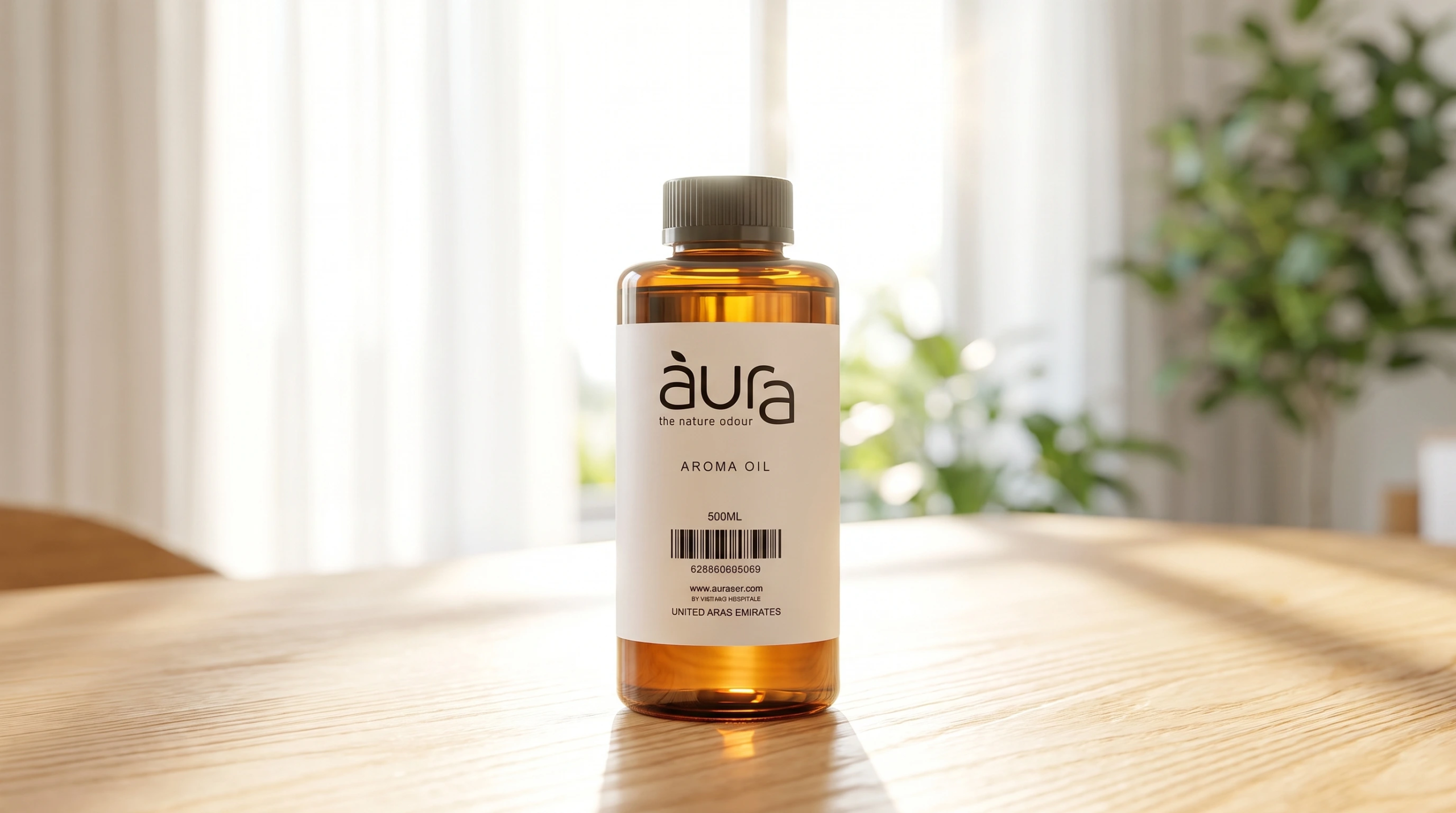
A bottle of diffuser oil that smelled excellent in January can smell noticeably flat by August without anyone doing anything wrong to it.
The oil was not defective. It was stored the way most people store things, which in a UAE apartment means somewhere warm, and that is enough.
Understanding what heat does to fragrance oil explains both why this happens and why the fix is simpler than most people assume.
What actually degrades
Fragrance oil is not a single substance. It is a mixture of aromatic compounds with different molecular weights and different stability.
The lightest compounds, the ones responsible for the opening character of a fragrance, are also the most volatile and the least stable. They evaporate readily, and they oxidize readily. Heat accelerates both.
Heavier base compounds are considerably more robust. They survive conditions the light notes do not.
This is why degraded oil does not smell wrong exactly. It smells reduced. The brightness at the top of the profile thins out first, leaving something heavier and flatter than the original. Most people describe it as the oil having lost its freshness, which is an accurate description of what has physically happened.
Why oxidation is the real problem
Evaporation only matters if the bottle is open. Oxidation happens regardless.
Oxygen reacts with certain aromatic compounds, particularly terpenes, converting them into different molecules with different smells. Citrus oils are the most vulnerable to this. Limonene, the dominant compound in most citrus profiles, oxidizes into compounds that smell sharp and slightly stale rather than bright.
The reaction is temperature-dependent. As a rough rule, chemical reaction rates roughly double for every ten degrees of temperature increase. A bottle at thirty-five degrees is oxidizing substantially faster than the same bottle at twenty.
Every time a bottle is opened, fresh oxygen enters the headspace above the liquid. A bottle that has been half used has twice the air volume sitting in contact with the oil compared to a full one, which is why oils tend to degrade faster in the second half of the bottle.
The UAE specific problem
Two conditions here make this sharper than it would be elsewhere.
The first is ambient temperature range. Outdoor temperatures reach the mid forties for months. Indoor storage areas that are not directly air conditioned, including many cupboards on external walls, storage rooms, and utility areas, run considerably warmer than the living spaces.
The second is light. UAE sunlight is intense, and many apartments have large glazed areas. Ultraviolet light drives photochemical reactions in aromatic compounds independently of temperature. A bottle sitting on a windowsill or a shelf catching direct sun is being degraded by two mechanisms simultaneously.
The combination of these two produces failure rates that people in temperate markets rarely encounter. An oil that would last two years in a cool European cupboard can be noticeably degraded within four to six months in a warm UAE storage area with light exposure.
Where to actually store it
The requirements are straightforward. Cool, dark, sealed, upright.
“Cool” means an air conditioned room rather than a storage cupboard on an external wall. A drawer or cabinet inside a bedroom or living area is a better environment than a dedicated storage room that does not receive cooling.
Dark means out of direct sunlight entirely. Amber and dark glass bottles help by filtering some ultraviolet, which is why most quality diffuser oil ships in dark glass rather than clear, but the bottle is a mitigation rather than a solution. A dark bottle in direct sun still degrades faster than a clear one in a drawer.
Sealed means the cap tightened properly after every use. This is the step people skip most often and it directly controls how much oxygen sits in contact with the oil between uses.
Upright prevents contact between the oil and the cap seal, which matters for the small number of oils that can degrade certain plastics over long periods.
Refrigeration is sometimes suggested and it is unnecessary. It introduces condensation risk when the bottle is removed and warmed, and water in fragrance oil causes its own problems. A cool cupboard is sufficient.
Practical habits that extend life
Buy quantities that match your actual usage rate. A large bottle bought for value that then sits half used for eighteen months is worse value than a smaller bottle finished in four months, because the second half of the large bottle degrades in storage.
Decant if you have bought a large amount. Transferring what you will use over the next month into a smaller dark bottle reduces the headspace oxygen in contact with both quantities. The main supply stays sealed, and the working quantity gets used before degradation matters.
Keep working bottles out of the room where the diffuser runs if that room gets warm. The convenience of storing oil next to the device is real, but not if that spot is on a shelf near a window.
Label with the date opened. Not for strict expiry management, but because knowing a bottle has been open for eight months explains a change in performance that would otherwise seem mysterious.
How to tell if an oil has degraded
Smell the bottle directly at room temperature and compare it against your memory of when it was new.
Degraded oil typically presents in one of three ways. The opening feels thinner, with less brightness than it had. There is a sharpness that was not there before, particularly with citrus profiles. Or the whole thing smells muted, as though it is being experienced through something.
There is also a performance signal. Oxidized oil often produces less apparent output at the same intensity setting, because the lighter compounds that gave the fragrance its immediate presence are the ones that degraded.
If a bottle has clearly gone, it has gone. Oxidation is not reversible. The practical response is to use it in a space where fragrance quality matters less, a utility area or a bathroom, rather than in the main living space, and store the replacement properly.
Frequently Asked Questions
How should diffuser oil be stored in the UAE?
Cool, dark, sealed, and upright. Store in an air conditioned room rather than a storage cupboard on an external wall, since unconditioned storage areas run considerably warmer than living spaces. Keep bottles out of direct sunlight entirely, since ultraviolet light degrades aromatic compounds independently of heat. Tighten caps fully after every use to limit oxygen contact, which is the main driver of degradation between uses.
Does heat actually damage fragrance oil?
Yes, through oxidation. Heat accelerates the chemical reactions that convert aromatic compounds into different molecules with different smells. Chemical reaction rates roughly double for every ten degrees of temperature increase, so a bottle stored at thirty-five degrees degrades substantially faster than the same bottle at twenty. The lightest compounds, which carry the opening character of a fragrance, degrade first.
How long does diffuser oil last once opened?
It depends heavily on storage conditions. Properly stored in a cool, dark place with the cap sealed, most fragrance oils hold their character for twelve to twenty-four months. In a warm UAE storage area with light exposure, noticeable degradation can occur within four to six months. Oils in the second half of a bottle degrade faster because more air sits in contact with the remaining liquid.
Should diffuser oil be kept in the fridge?
No. Refrigeration is unnecessary and introduces condensation risk when the bottle is removed and warms up, and water in fragrance oil causes separate problems. A cool cupboard or drawer in an air conditioned room provides sufficient temperature control without the condensation issue.
How can I tell if my diffuser oil has gone off?
Smell the bottle directly at room temperature. Degraded oil usually presents as a thinner opening with less brightness than it had originally, a sharpness that was not previously there, particularly in citrus profiles, or a generally muted quality. There is often a performance signal too, with less apparent output at the same intensity setting, since the lighter compounds that produced immediate presence are the first to degrade.