

Cold air diffusers do not tolerate the wrong oil. There is no water to dilute it and no heat to thin it. Whatever goes in the reservoir meets a precision atomiser directly, and if it is outside the viscosity range that atomiser was built for, performance drops and residue builds.
This is the short version of what works, what does not, and how to check before you fill it.
Can you use reed diffuser oil in a cold air diffuser?
No.
Reed diffuser liquid contains alcohol, water or glycol as a carrier so the fragrance can travel up the reeds by capillary action. Cold air atomisers are designed for pure undiluted oil. The carrier does not atomise, it coats the internal mechanism, and output degrades progressively until the device appears to have failed.
The same applies to room spray refills and wax melt oils. Different delivery method, different formulation, not interchangeable.
Can you use essential oils in a cold air diffuser?
Some, not all. It depends on viscosity.
These atomise cleanly. Lavender, eucalyptus, bergamot, peppermint, rosemary, lemon, tea tree. All are thin, free flowing, and well inside the workable range.
These cause problems. Vetiver, benzoin, myrrh, patchouli at full strength, pure oud resin, and any solvent extracted absolute. Too thick. They draw unevenly, produce inconsistent particle sizes, and leave residue.
Never these. Any essential oil pre diluted in a carrier oil such as sweet almond, jojoba or fractionated coconut. These are sold for topical use. The carrier is fatty, it does not atomise, and it is the single most common cause of a cold air diffuser losing output.
The one minute test
Put one drop on a white tissue. Wait sixty seconds.
No residue, or a faint ring of colour. Pure and atomisable. Safe to use.
A translucent greasy patch that stays. Carrier oil present. Do not put it in the device.
Nothing at all, evaporated instantly. Too volatile. It will burn through fast and may not form stable particles.
That test resolves most compatibility questions faster than reading a label, because labels frequently omit the carrier.
What is actually designed for this
Oil formulated for cold air diffusion is built around the physics of atomisation rather than around skin safety or candle performance. Three things are controlled that nobody controls in a general essential oil.
Viscosity, so the oil draws cleanly into the pressurised airstream.
Volatility balance across the composition, so the fragrance develops evenly instead of the light notes vanishing in the first two minutes.
Residue profile, so repeated cycling does not build deposits on the mechanism.
A purpose formulated aroma diffuser oil will state that it is intended for cold air or nebulising systems. If the description only says suitable for diffusers, it is probably written for ultrasonic devices, which have none of these requirements.
If the wrong oil has already been used
Output will have dropped gradually rather than suddenly. That is residue, not failure.
Empty the reservoir. Add 15 to 20ml of isopropyl alcohol at 70 percent or higher. Run the device for five to eight minutes so the alcohol passes through the atomiser and dissolves the film. Empty, run dry for two minutes, then refill.
For heavier buildup, extend the alcohol run to fifteen or twenty minutes and repeat once.
Never use water. It does not dissolve oil residue and it leaves mineral deposits of its own. Never use soap. Never touch the atomiser with a tool.
Quick reference
| Oil Type | Compatibility | Reason |
|---|---|---|
| Purpose-formulated cold air oil | Yes | Viscosity and volatility are calibrated for cold-air diffusion. |
| Thin essential oils | Yes | Within the required atomisation range. |
| Thick resins and absolutes | No | Too viscous, resulting in uneven particle distribution. |
| Carrier-diluted blends | No | Fatty residue can coat and damage the mechanism. |
| Reed diffuser liquid | No | Typically formulated with alcohol or water-based carriers. |
| Room spray refill | No | Contains propellants or solvents unsuitable for the system. |
Matching the oil to the mechanism is most of the difference between a scent diffuser that performs for years and one that degrades within months.
GOOD TO KNOW
Can you use reed diffuser oil in a cold air diffuser?
No. Reed diffuser liquid is formulated with alcohol, water or glycol as a carrier so fragrance can travel up the reeds. Cold air atomisers require pure undiluted oil. The carrier does not atomise, it coats the mechanism, and output degrades progressively. The same applies to room spray refills and wax melt oils.
Can you use essential oils in a cold air diffuser?
Thin, free flowing essential oils work well, including lavender, eucalyptus, bergamot, peppermint, rosemary and lemon. Thick resinous oils such as vetiver, benzoin, myrrh and pure oud resin are too viscous and produce inconsistent particles. Essential oils pre diluted in a carrier oil should never be used, as the fatty component coats the atomiser.
What is the best oil for a cold air diffuser?
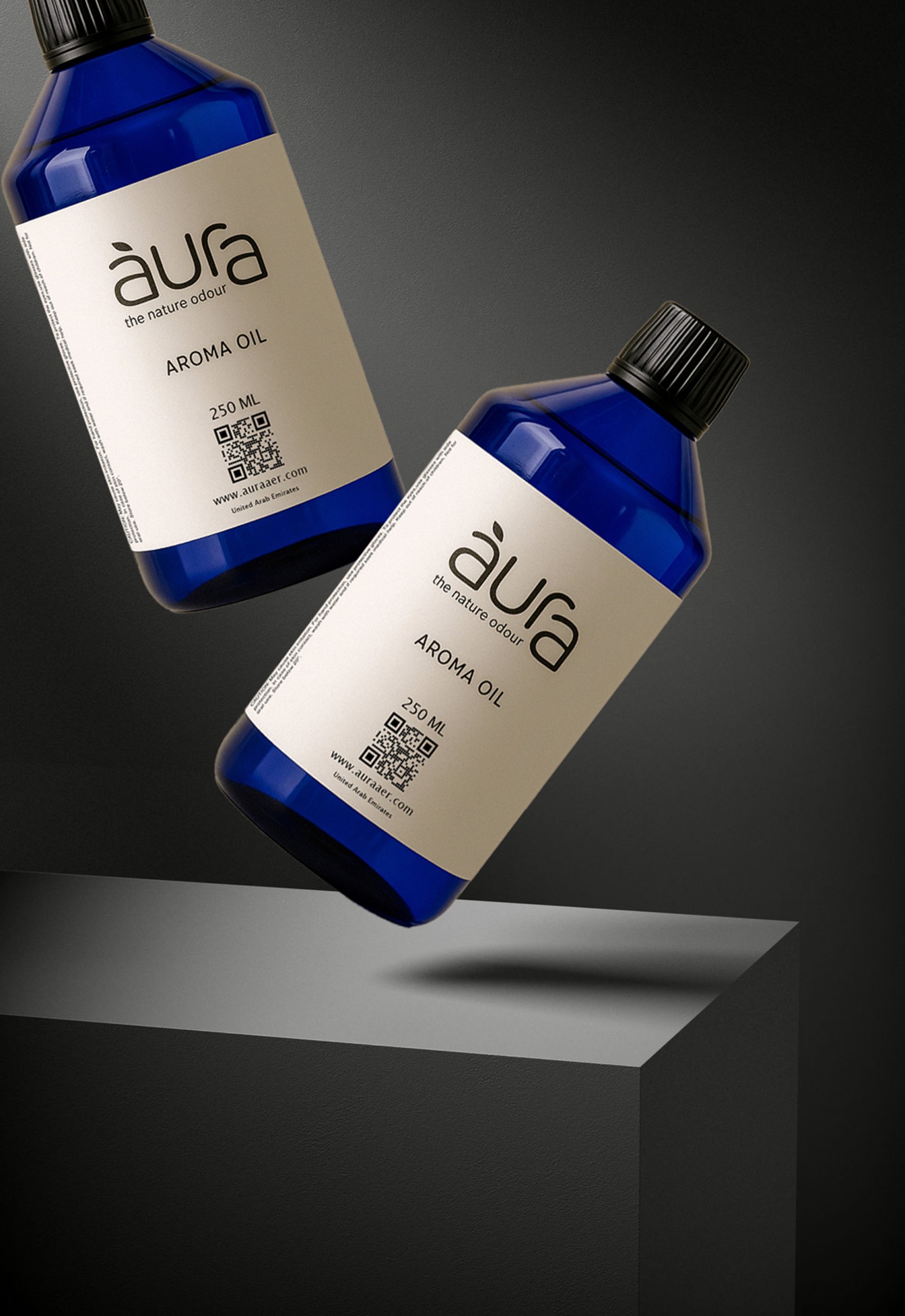
Oil formulated specifically for cold air or nebulising diffusion. These have viscosity calibrated for atomisation, volatility balanced across the composition so the fragrance develops evenly, and a residue profile suited to repeated cycling. A product described only as suitable for diffusers is usually formulated for ultrasonic devices, which have none of these requirements.
How do I know if an oil contains carrier oil?
Place one drop on white tissue and wait sixty seconds. A pure atomisable oil evaporates leaving nothing or a faint ring of colour. A carrier diluted oil leaves a translucent greasy patch that remains. That residue is the carrier, and it is what builds up inside a cold air diffuser over repeated use.
How do I clean a cold air diffuser after using the wrong oil?
Empty the reservoir, add 15 to 20ml of isopropyl alcohol at 70 percent or higher, and run the device for five to eight minutes. Empty, run dry for two minutes, then refill with compatible oil. For heavier buildup extend to fifteen or twenty minutes and repeat once. Never use water, soap, or any tool on the atomiser.