

This is the question most cold-air diffuser owners ask after they have already made the mistake.
They bought a beautiful device. They filled it with the oil they had — the one from the gift set, the essential oil from the pharmacy, the cheap bottle from the online store — and one of three things happened. Either the scent was wrong. Or the device started making an unusual sound. Or it stopped producing fragrance entirely within a few weeks.
The device was not faulty. The oil was.
Cold-air diffusers are precision instruments. The atomiser — the component that breaks oil into nano-particles — is engineered to work with a specific type of oil at a specific viscosity range. Put the wrong thing in and the atomiser does not break it down properly. The particles are too large, too inconsistent, or the oil simply cannot be atomised at all. The device struggles. Performance drops. In some cases the atomiser blocks entirely.
This is not a minor detail. It is the single most important thing to understand about owning a cold-air diffuser.
Why Cold-Air Diffusers Are Specific About Oil
Every other type of diffuser is forgiving about what you put in it. Ultrasonic diffusers dilute oil with water the water does most of the work, the oil is just a passenger. Reed diffusers absorb whatever you put in the bottle through capillary action. Candles melt everything with heat.
Cold-air diffusers work differently. There is no water to dilute with. No heat to thin out thick compounds. Just pressurised air meeting pure oil inside a precision atomiser. The oil has to do the work itself and that means it has to be the right oil for the job.
The atomiser is engineered for oils within a specific viscosity range thin enough to be pulled into the airstream and broken into micron-sized particles, but not so thin that it evaporates before it can be properly atomised. Outside that range, performance suffers immediately.
What Works — The Right Oil for Cold-Air Diffusion
Purpose-formulated diffuser oil
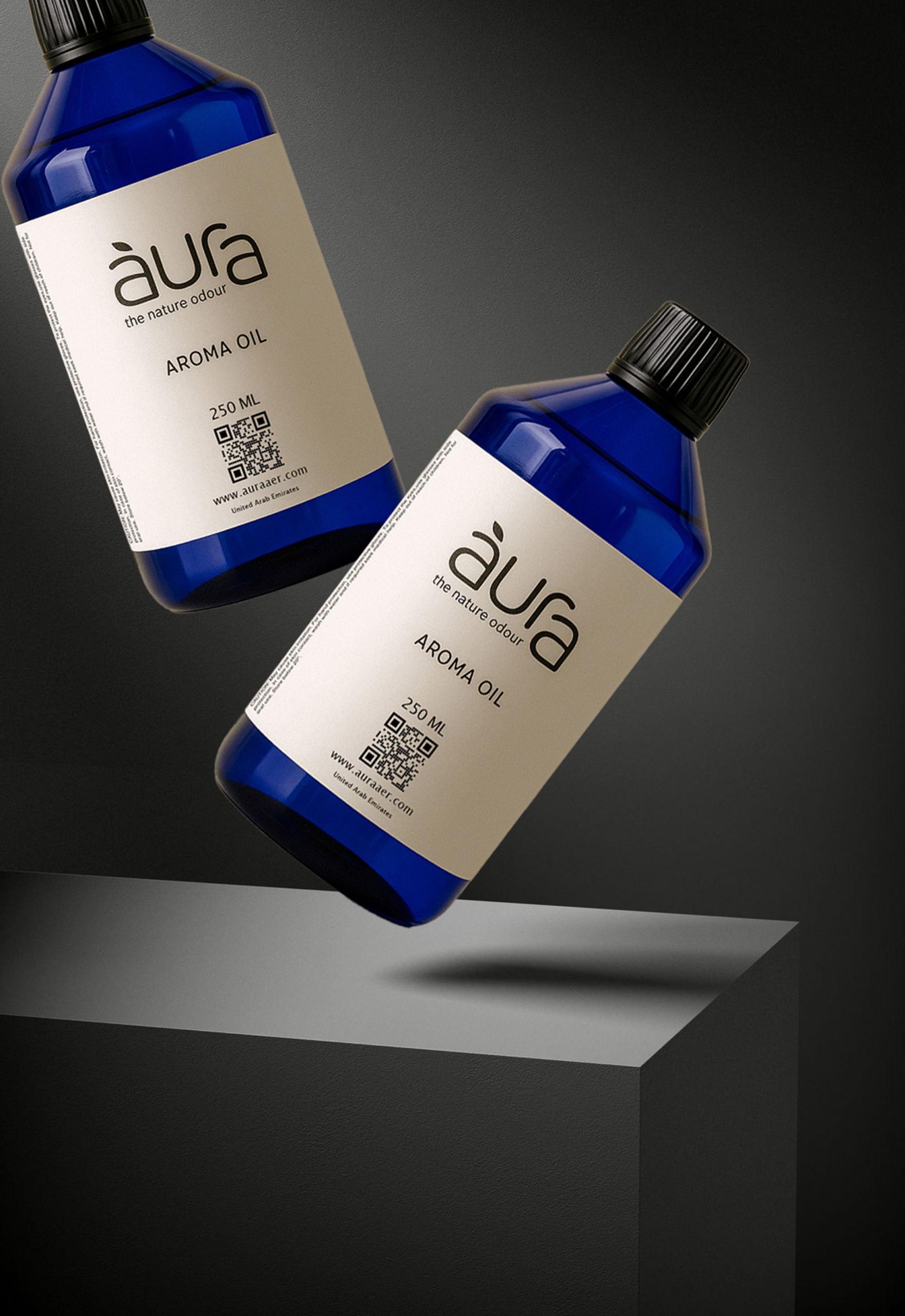
The correct choice for any cold-air diffuser is oil specifically formulated for cold-air atomization. These oils are designed to the correct viscosity, carry no carrier oil base, contain no water, and are composed of fragrance compounds that atomize cleanly and stay suspended in the air after dispersal.
AuraAer’s diffuser oil range is formulated specifically for this. Every oil in the collection is tested for cold-air atomization performance before it goes into any AuraAer device. The fragrance profiles are designed for UAE room volumes, UAE AC conditions, and the olfactory preferences of UAE residents.
Pure essential oils — with conditions
Some pure essential oils work in cold-air diffusers, but not all, and not without checking first. The oils that work are those with low viscosity and high volatility lavender, eucalyptus, bergamot, lemon, and peppermint. These atomize cleanly and produce consistent particle sizes.
The oils that cause problems are thick, resinous, or waxy at room temperature benzoin, myrrh, vetiver, patchouli in high concentrations, and most absolutes. These oils either partially block the atomizer, produce inconsistent particle sizes, or simply cannot be pulled into the airstream effectively.
Blended fragrance oils
Professionally blended fragrance oils, the kind used in luxury residential and commercial scenting, work very well in cold-air diffusers provided they are formulated without carrier oil bases. The complexity of a well-designed fragrance blend actually benefits from cold-air atomization more than any other diffusion method because the different molecular weights of the top, heart, and base notes all disperse correctly without heat degrading the lighter compounds.
What Does Not Work — And Why
Carrier oil blends
This is the most common mistake. Essential oils sold for massage, skincare, or general aromatherapy use are almost always diluted in a carrier oil almond oil, jojoba oil, coconut oil, or fractionated coconut oil. These carrier oils are thick. They do not atomize in a cold-air system. They coat the atomizer with a film of oily residue that gradually blocks the mechanism entirely.
If you have used a carrier-based oil in your cold-air diffuser and performance has declined the atomizer has oil residue buildup. It can be cleaned, but prevention is significantly easier than the fix.
Water-based fragrance mixtures
Reed diffuser liquids, room spray refills, and water-soluble fragrance concentrates are not compatible with cold-air diffusers. These products contain water, alcohol, or emulsifiers that interfere with the atomization process. Water in a cold-air system does not atomize the same way oil does the particle sizes are wrong and the mechanism is not designed for aqueous liquids.
Thick resinous oils at full concentration
Oud oil, benzoin, and myrrh work beautifully as scent experiences but at full concentration they are too viscous for most cold-air atomizers. If you want an oud-dominant profile in your cold-air diffuser, use a professionally blended oud fragrance oil rather than pure oud resin. The blend will have been formulated to the correct viscosity for atomization while preserving the character of the oud profile.
AuraAer’s diffuser aroma oil collection includes Gulf oud and oriental blends specifically formulated for cold-air diffusion the oud character is preserved without the viscosity issues of pure oud resin.
Cooking oils, synthetic air fresheners, and anything not designed for diffusion
These should never go near a cold-air diffuser. Cooking oils smoke and polymerize under the pressure conditions inside the atomizer. Synthetic air fresheners contain propellants and solvents not designed for atomization. The damage is immediate and often permanent.
How to Tell If Your Oil Is Compatible
Before filling your cold-air diffuser with any oil, apply this quick test.
Place a single drop of the oil on a clean white tissue or paper towel and leave it for 60 seconds. Then check what remains.
Clear result—no residue visible: The oil is likely low enough in viscosity and carrier content to work in a cold-air system. Proceed.
Greasy residue remains visible: The oil contains a carrier oil or thick resinous compounds. Do not use it in your cold-air diffuser. It will gradually block the atomizer.
No mark at all completely evaporated. The oil may be too volatile for effective cold-air atomization; it will evaporate before proper particle formation occurs. Use with caution and check device performance.
This test takes two minutes and prevents the most common cause of cold-air diffuser performance decline.
How Often to Clean the Atomizer—And How
Even with the right oil, occasional cleaning maintains peak performance. Here is the simple routine.
Every two to four weeks or whenever you switch to a significantly different oil profile empty the reservoir completely and run the device for five minutes with a small amount of isopropyl alcohol (70% concentration) in the chamber. The alcohol dissolves any light oil residue in the atomizer and evaporates cleanly, leaving no residue of its own.
Do not use water. Do not use soap. Do not attempt to clean the atomizer mechanism with a physical tool; the components are precision-engineered, and physical contact risks permanent damage.
If the device has significantly reduced output after extended use with incompatible oil, a longer soak with isopropyl alcohol (15 to 20 minutes) can clear heavier buildup. If performance does not recover after two cleaning cycles, the atomizer may need professional assessment.
The Simple Buying Rule
When buying oil for your cold-air diffuser, look for these three things on the label or product description:
“Formulated for cold-air diffusion” or “nebulizing diffuser compatible these phrases confirm the oil has been tested for the mechanism you are using.
No carrier oil is listed in the ingredients almond, jojoba, coconut, or fractionated coconut oil in the ingredients means it is not suitable for cold-air atomization.
Pure fragrance oil or essential oil — not a room spray, not a reed diffuser liquid, not a massage blend.
When in doubt contact the supplier before filling the device. One incompatible fill does less damage than six months of gradual atomizer buildup from the wrong oil used consistently.
The right oil in the right device is the combination that produces the scent experience cold-air diffusion is capable of. Get that match right, and the performance speaks for itself.