

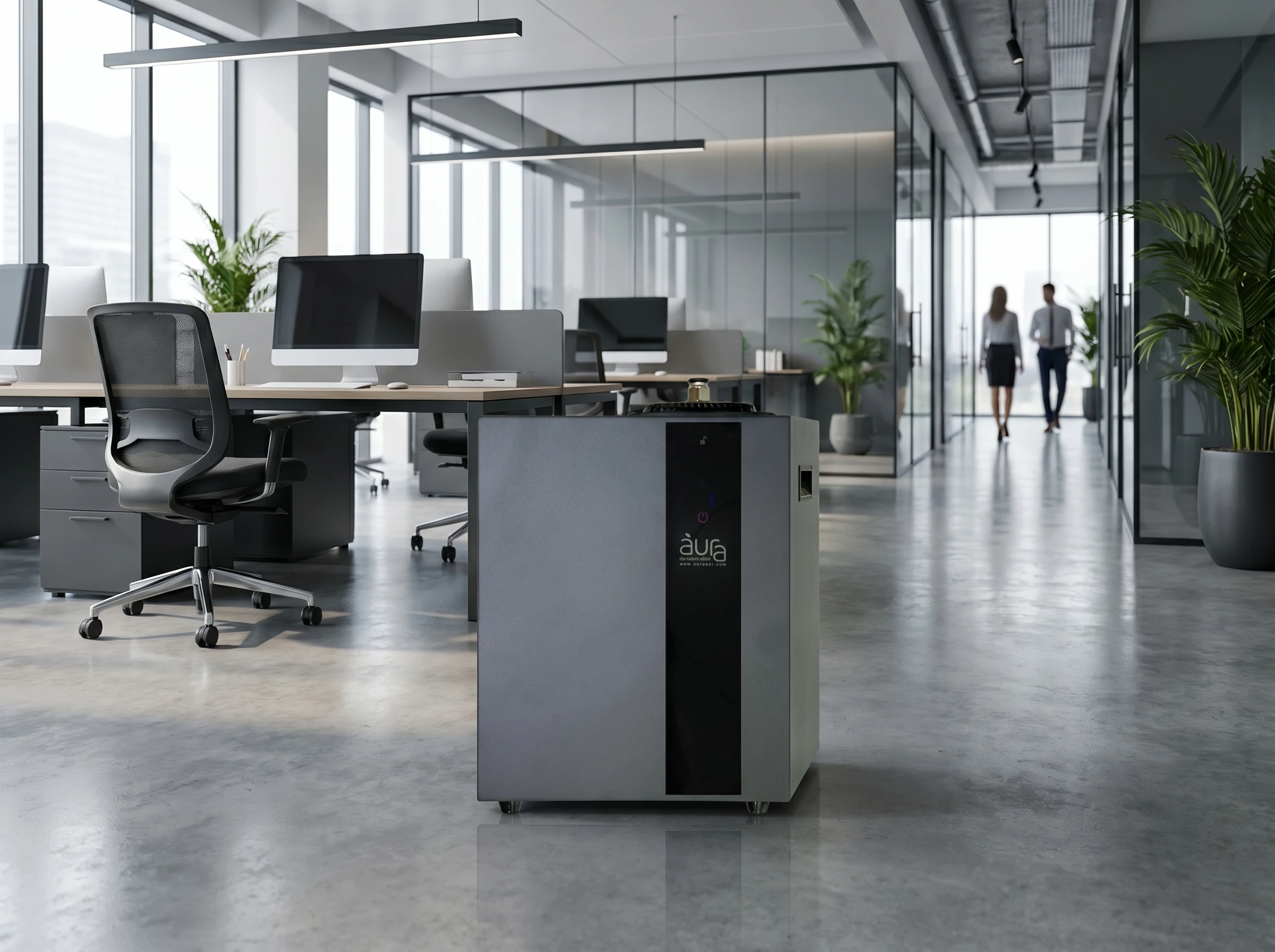
Nobody talks about what their office smells like when they talk about workplace performance.
They talk about ergonomic chairs. Standing desks. Lighting temperature. Noise levels. Acoustic panels. All of the sensory variables that affect how well people think and work get considered and budgeted for except one.
The air.
Not air quality in the mechanical sense. That gets handled by the HVAC system. The ambient fragrance environment of the workspace — what the office actually smells like to the people working in it for eight to ten hours a day — gets left entirely to chance in almost every UAE office.
The chance result is usually neutral at best. Recycled AC air with traces of coffee, cleaning product, and whatever someone brought in for lunch. Not unpleasant. Not intentional. Not doing anything useful for the people breathing it all day.
The intentional alternative is significantly more interesting.
What Research Says About Scent and Cognitive Performance
The research on ambient scent and workplace performance is more specific and more compelling than most people expect.
A study conducted at Northumbria University found that participants working in a rosemary-scented environment performed measurably better on memory tests and mental speed tasks than participants in an unscented environment. The active compound in rosemary, 1,8-cineole, crosses the blood-brain barrier and inhibits the enzyme that breaks down acetylcholine, a neurotransmitter involved in memory formation and sustained attention.
Peppermint has a consistent association with increased alertness and reduced mental fatigue across multiple studies. Citrus profiles, particularly lemon, show measurable improvements in accuracy on detail-oriented tasks. These are not placebo effects from pleasant smells. They are documented interactions between specific aromatic compounds and neurochemical pathways that affect cognitive function directly.
The practical implication is straightforward. The air quality in a UAE office is an input to cognitive performance, just like the lighting or the seating. Leaving it unmanaged means accepting whatever performance impact the random baseline produces. Managing it deliberately means a measurable improvement in focus, accuracy, and sustained attention across the working day.
Why UAE Offices Are a Particularly Good Case for Scent Diffusion
UAE offices have a specific environmental characteristic that makes ambient scenting both more necessary and more effective than in most global markets.
Air conditioning runs continuously, year round, at a level that most other climates never require. The indoor air in a Dubai or Abu Dhabi office building is heavily managed, heavily recirculated, and consistently low in humidity. It is also consistently odor-neutral—the AC strips ambient character from the air as effectively as it strips heat.
This creates an indoor environment that is thermally comfortable but sensorially flat. People work in it for long hours. The sensory neutrality of the AC-conditioned air contributes to the afternoon fatigue that most UAE office workers experience—not just from the workload but from the unvarying, stimulus-free sensory environment.
A cold-air scent diffuser integrated into a UAE office environment addresses this directly. The nanoparticles produced by cold-air atomization integrate with the HVAC airflow rather than being disrupted by it. The AC becomes the distribution network, carrying the fragrance through the space consistently.
A correctly sized cold-air scent diffuser in a UAE office creates an intentional ambient fragrance environment where previously there was none. The cognitive benefits documented in research apply. The sensory flatness that contributes to afternoon energy drops is addressed. The office starts doing something active for the people in it rather than passively containing them.
Which Scents Work in Office Environments
Not every fragrance is appropriate for an office. The profiles that work for residential relaxation and sleep are not the right choice for a workspace. Office scenting requires a different brief.
Rosemary for deep focus and memory tasks
The research case for rosemary in focus-intensive work environments is the strongest of any aromatic compound in the workplace performance literature. For roles involving detailed analysis, writing, coding, financial work, or any task requiring sustained concentration and accurate recall, rosemary in the office environment is the most evidence-supported choice available.
At 20 to 25 percent intensity on a cycle schedule, it is present without being intrusive. Most people describe it as a clean, slightly herbal background note rather than a dominant fragrance. It does its cognitive work without demanding attention.
Lemon and citrus for accuracy and detail work
Citrus profiles have a consistent association with improved accuracy in research. For roles involving data entry, proofreading, compliance review, or any detail-intensive task where errors are costly, lemon and clean citrus blends produce documented improvements in task accuracy.
Citrus also serves a practical purpose in UAE office environments — it counteracts the mid-afternoon sensory fatigue that AC-dominant indoor air contributes to. A diffuser switching to a citrus profile at 2pm is one of the most practical interventions available for the productivity dip that affects most UAE offices in that window.
Peppermint for alertness and energy
For morning sessions or periods requiring high alertness and fast decision-making, peppermint has the strongest association with increased arousal and reduced mental fatigue in the research. It is not a fragrance for long sustained sessions—the alertness effect of peppermint is more pronounced in shorter exposures. Use it at the start of high-stakes meetings or intensive work sessions rather than as an all-day background scent.
What to avoid in office environments
Heavy floral profiles produce drowsiness associations in many people. Oud and oriental blends, while entirely appropriate for UAE home environments, are too ceremonially associated with rest and gathering to function effectively in a work context. Lavender actively promotes the parasympathetic rest state — the opposite of what a focused work environment requires.
The office fragrance brief is clean, light, and cognitively stimulating. Everything heavy, warm, or sleep-associated belongs in the home environment rather than the workspace.
How to Set Up Office Scenting Practically
Sizing the device to the space
UAE office spaces vary enormously in layout and volume. An individual private office of 20 to 30 square meters needs a compact unit. An open-plan floor of 200 to 500 square meters requires a commercial-grade cold-air diffuser with higher air-volume capacity. Getting the sizing right matters more in an office than in a home—an undersized device in a large open-plan space produces a fragrance that is only detectable near the device, which provides none of the cognitive benefits documented for ambient exposure.
Scheduling around the workday
A fixed schedule matched to productive work sessions outperforms continuous operation in office environments. A practical schedule for a standard UAE working day might run rosemary from 9am to 12pm during the core morning focus window, switch off during the lunch period, resume with a citrus profile from 2pm to 5pm to address the mid-afternoon energy dip, and stop at the end of the working day.
App control makes this automatic once configured. The schedule runs without manual intervention. The office fragrance environment is managed deliberately throughout the working day without requiring anyone to remember to do anything.
Placement in open-plan UAE offices
In an open-plan UAE office with central AC, position the diffuser away from both the primary air return vents and the direct blast of supply vents. The ideal position is approximately central in the office space, at 80 centimeters to 1.2 meters off the floor, with clear airflow on at least two sides. The AC airflow will carry the fragrance across the space toward the return vents, distributing it through the entire working area.
For very large spaces above 300 square meters, a single device is rarely sufficient. Two or three units positioned at strategic intervals produce more even coverage than one oversized unit in a central position.
Managing fragrance for people with sensitivities
Any office scenting program should account for colleagues with fragrance sensitivities or respiratory conditions. Cold-air diffusion at appropriate intensity produces considerably less fragrance concentration than candles, sprays, or other diffusion methods. Starting at 15 to 20 percent intensity and increasing based on team feedback is a sensible approach. Maintaining clear ventilation pathways and keeping intensity at the minimum effective level protects people with sensitivities while still delivering the intended ambient effect.
The Business Case for Scenting UAE Offices
For facilities managers, HR teams, and business owners in the UAE considering whether ambient office scenting is a justified cost, the case is grounded in straightforward productivity mathematics.
The documented performance improvements from research-supported fragrance profiles—improved memory performance from rosemary, improved accuracy from citrus, and reduced fatigue from peppermint—translate directly to output quality and error rates for roles where those cognitive functions matter.
The cost of a commercial cold-air diffuser and a monthly oil supply for a UAE office is a fraction of the cost of a single productivity intervention like ergonomic furniture, acoustic treatment, or staff training. The payback period from measurable performance improvement, reduced error rates, and reduced afternoon fatigue is considerably shorter than most organizations expect.
Scenting a UAE office is not a lifestyle decision. It is a facilities management decision with a measurable ROI.
Frequently Asked Questions
Do scent diffusers genuinely improve office productivity?
Research from Northumbria University found measurable improvements in memory performance and mental speed in rosemary-scented environments compared to unscented ones. Citrus profiles show consistent improvements in task accuracy in detail-oriented work. Peppermint reduces mental fatigue and increases alertness in short exposures. These are documented interactions between specific aromatic compounds and cognitive function rather than placebo effects from pleasant smells.
What scent is best for office concentration and focus?
Rosemary has the strongest research evidence for sustained focus and memory performance in work environments. The active compound 1,8-cineole interacts directly with neurotransmitter pathways involved in attention and memory. Lemon and citrus profiles are most effective for accuracy in detail-intensive tasks. Peppermint suits high-alertness periods and morning sessions. Heavy or warm profiles, including lavender, oud, and floral blends, are not appropriate for office use.
How do you set up a scent diffuser in a UAE office?
Size the device to the office volume—compact units for individual offices, commercial-grade units for open-plan floors. Position at 80 centimeters to 1.2 meters height away from AC supply and return vents with clear airflow on two sides. Set a schedule matched to the work day via app control. Run rosemary in morning focus sessions and citrus from mid-afternoon onwards. Start at 15 to 20 percent intensity and adjust based on team feedback.
Is office scenting safe for employees with fragrance sensitivities?
Cold-air diffusion at appropriate intensity levels produces significantly lower fragrance concentrations than candles, aerosol sprays, or plug-in devices. Starting at 15 to 20 percent intensity and maintaining clear ventilation reduces exposure for people with sensitivities. Consulting with your team before implementing an office scenting program and adjusting intensity based on feedback is the standard recommended approach for UAE corporate environments.
How large a diffuser do you need for a UAE office?
For individual offices of 20 to 30 square metres a compact unit is appropriate. Open-plan floors of 200 to 500 square metres require commercial-grade cold-air diffusers rated for that air volume. For spaces above 300 square metres, multiple units positioned at strategic intervals produce more even coverage than a single central device. UAE offices with high ceilings require devices rated for cubic metre volume rather than square metre floor area.
Why does the afternoon energy dip happen in UAE offices and can scent help?
UAE offices run air conditioning continuously at high capacity, creating an indoor environment that is thermally comfortable but sensorially uniform. Extended exposure to an unvarying, stimulus-free sensory environment contributes to the mid-afternoon fatigue that most UAE office workers experience. A diffuser switching to a citrus or peppermint profile at 2pm introduces a new sensory input that counteracts this flatness. Research on citrus and peppermint shows consistent reduction in perceived fatigue and improvement in alertness during this window.