

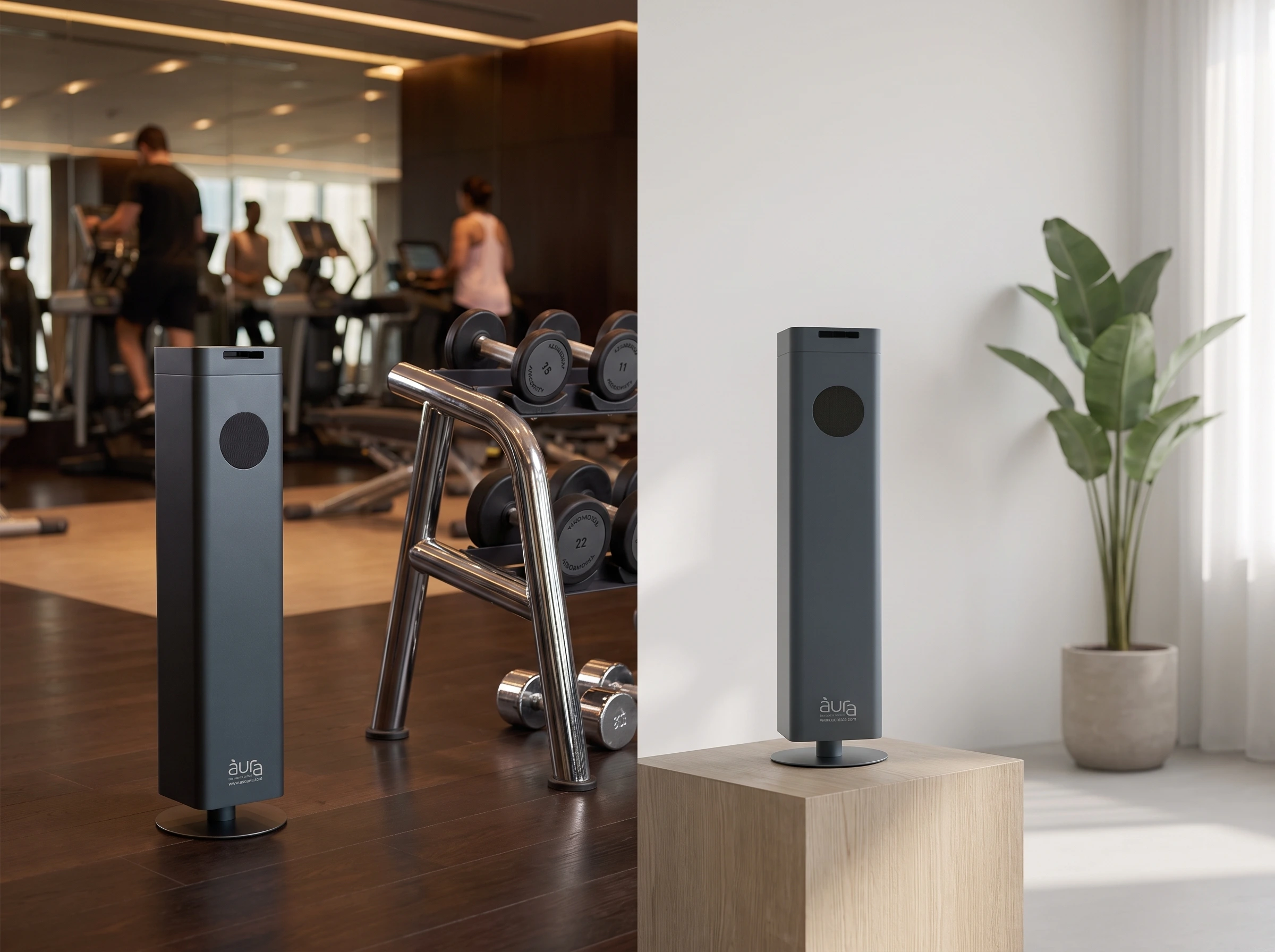
Walk into a well-run wellness studio in Dubai, and the air tells you something before anything else does.
Not a strong smell. Not a product being sprayed. Just an ambient quality to the air that signals this space was designed for what you came here to do. The temperature is right. The light is considered. And the air smells intentional.
That intentionality is not accidental, and it is not expensive. It is the result of a decision that most UAE fitness and wellness operators have not yet made — to treat the sensory environment of their space with the same deliberateness they apply to their equipment, their programming, and their staff.
The operators who have made that decision report something consistent. Members stay longer. They feel the sessions are more effective. They return more reliably.
Here is why that happens and how to implement it correctly across UAE gym and wellness studio environments.
The Research Behind Scent and Physical Performance
The relationship between ambient scent and physical performance has a more substantial research history than most fitness professionals expect.
A study published in the International Journal of Sport Nutrition and Exercise Metabolism examined the effect of peppermint aroma on athletic performance across multiple measures, including grip strength, running speed, and lung capacity. Participants who inhaled peppermint aroma before and during exercise showed statistically significant improvements across all three measures compared to the control group. The researchers attributed the effect to peppermint’s stimulating action on the autonomic nervous system and its documented bronchodilatory properties, the temporary increase in airway diameter that eucalyptol-adjacent compounds produce.
Separate research on exercise motivation found that pleasant ambient scent in workout environments reduced perceived exertion during equivalent workloads. In other words, members working at the same intensity in a scented environment reported the exercise as feeling less difficult than members in an identical but unscented environment. The work was the same. The subjective experience of doing it was meaningfully different.
For UAE fitness operators competing for members in a market where gym quality expectations are high and retention is the primary commercial challenge, a measurable reduction in perceived exertion is a commercially significant outcome. Members who find their sessions subjectively easier tend to return more regularly, push harder without intending to, and describe the facility more positively to people considering membership.
Why UAE Fitness Spaces Have a Specific Scenting Challenge
UAE gyms and wellness studios have environmental characteristics that create both a greater need for deliberate scenting and greater technical challenges in delivering it.
The body odor problem is more acute in sealed environments.
This is the point that most fitness facility operators think about first when scenting comes up, and it is worth addressing directly. A gym that smells of effort and perspiration is a gym where members feel self-conscious about returning on busy days and where potential members who visit for a tour form a negative first impression they rarely articulate but consistently act on.
UAE fitness facilities are sealed environments with managed air. The same AC-driven indoor air that makes the temperature comfortable also recirculates the odor compounds produced by exercise continuously through the space. A gym with fifty active members in a sealed, climate-controlled environment accumulates odour faster than any naturally ventilated equivalent.
A cold-air scent diffuser does not mask these odours. Masking—using a strong scent to overwhelm an underlying smell—is what air freshener sprays attempt and consistently fail at because it requires a concentration of fragrance that becomes its own problem. Ambient scenting at appropriate intensity establishes a baseline fragrance environment that the space returns to when member density drops, and that holds its character during busy periods without requiring the overpowering concentration that masking demands.
The result is a gym that smells like eucalyptus and clean air rather than one that smells like eucalyptus spray over sweat. The difference is felt immediately by anyone who walks in from outside.
High cubic metre volumes require correctly sized devices.
UAE gym floors, studio spaces, and wellness areas are large. A main gym floor of 400 to 800 square metres with three- to four-meter ceilings contains significant air volume. A single consumer-grade diffuser in a space of this size produces a fragrance zone near the device rather than ambient coverage. Commercial-grade cold-air diffusion equipment sized for the actual cubic metre volume of the space is a prerequisite for effective gym scenting.
High body heat output affects particle dispersal.
Active bodies generate heat that creates localized convection currents above exercise stations. These micro-convection patterns affect how fragrance particles disperse through a busy gym floor differently from an empty one. In practice this means a gym with fifty active members distributes fragrance more unevenly than the same space when empty. Positioning devices at multiple points across the gym floor rather than at a single central point compensates for this effect.
Which Scents Work for Which Wellness Spaces
Different wellness facility types require different fragrance briefs. The congruence principle that applies to retail scenting applies here with equal force—the fragrance should reinforce the intended physiological and psychological state of the space rather than simply smelling pleasant.
Main gym floor and functional training areas
Peppermint and eucalyptus are the most research-supported choices for workout environments. Both have documented stimulant effects on the autonomic nervous system and bronchodilatory properties that support respiratory performance during exercise. Eucalyptus is particularly relevant in UAE gym environments because its eucalyptol content provides a subjective sensation of respiratory ease and cleanliness that counteracts the sealed, recirculated air quality of a high-occupancy indoor exercise space.
Run at 25 to 35 percent intensity on a continuous cycle throughout operating hours. The higher activity levels in gym spaces and the additional air turbulence from body heat mean standard intensity recommendations need adjustment upward compared to residential or office applications.
Yoga and pilates studios
The fragrance brief for a yoga or Pilates studio is fundamentally different from a gym floor. The physical intensity is lower, but the attentional requirement is higher. Members need to be present and focused without the stimulant arousal that peppermint and eucalyptus produce in higher-intensity exercise contexts.
Sandalwood, vetiver at low concentration, frankincense, and light lavender serve the yoga studio context. These profiles promote the sustained, inward-focused attention that yoga and Pilates practices require. Frankincense specifically, through its effect on breathing depth and the parasympathetic nervous system, is physiologically congruent with the breath-focused nature of both practices.
Run at 20 to 25 percent intensity. The lower physical intensity and the enclosed nature of most yoga studio spaces mean the fragrance requires less output to achieve ambient coverage.
Recovery zones, stretching areas, and relaxation rooms
Recovery is the transition from physical exertion to rest. The scenting brief for recovery zones mirrors the post-work recovery brief described in residential contexts reducing cortisol, promoting parasympathetic activation, and supporting the physical recovery processes that follow exercise.
Lavender and chamomile serve recovery zones as the primary oils. Cedarwood can be added for muscle recovery associations. The intensity should be noticeably lower than the main gym floor, creating a perceptible sensory transition as members move from the workout area to the recovery area. That sensory transition itself signals the body to begin shifting from active to recovery mode, reinforcing the physiological change the zone is designed to support.
Reception, changing rooms, and circulation areas
Reception should carry a clean, welcoming profile that creates a positive first impression without committing to either the stimulant brief of the workout floor or the recovery brief of the relaxation zone. A light citrus or white musk profile in reception bridges the two environments.
Changing rooms present the most acute version of the sealed UAE environment odour challenge. A cold-air scent diffuser in a changing room at low intensity with a clean eucalyptus or green accord creates the baseline ambient quality that prevents odour accumulation during peak periods. Size appropriately for the changing room volume and run on a continuous schedule throughout operating hours.
Implementation Across a UAE Wellness Facility
Zone mapping before device selection
Map the facility by zone before selecting any equipment. Each zone has its own brief, its own cubic metre volume, and its own usage pattern that affects device sizing and scheduling. A main gym floor, a yoga studio, a recovery area, a reception, and changing rooms are five distinct settings within one facility. Treating them as one environment with a single fragrance and a single device produces an incoherent result.
Cubic metre calculations for commercial fitness spaces
Calculate cubic metre volume for each zone independently. Multiply the zone floor area by the ceiling height. Select a cold-air diffuser with a coverage rating appropriate for that volume. For UAE gym floors with high occupancy and high body heat output, size up from the minimum coverage calculation to account for the additional air dynamics that active bodies produce.
Scheduling around usage patterns
UAE fitness facilities have predictable usage peaks—early morning before work, midday, and the extended evening peak from 5pm to 10pm. The diffuser schedule should account for these patterns. Running at standard intensity during off-peak hours and increasing intensity during peak periods maintains consistent ambient coverage against the higher air dynamics and odour production of busy sessions.
App-controlled devices allow this scheduling to be set once and run automatically. The intensity and cycle timing can be adjusted by zone and by time period without physical intervention.
Member communication
For wellness studios with close member relationships, communicating the intentional scenting decision to the member base builds brand perception rather than simply allowing the effect to be felt unconsciously. Members who know the space is scented deliberately with research-supported profiles for their specific training context are more likely to attribute their subjective experience improvement to the facility’s intentionality rather than to chance.
This is a small point in implementation terms but a meaningful one in the UAE fitness market where member perception of facility quality and attention to detail drives both retention and referral.
The Commercial Case for UAE Wellness Operators
Member retention is the primary commercial metric for UAE fitness businesses. Acquisition costs for new members are high. The value of retaining an existing member for an additional six months significantly exceeds the cost of the equipment and oil required to scent the facility correctly.
Research on retail and hospitality scenting consistently shows that ambient fragrance increases dwell time and positive environment evaluation. Applied to fitness facilities, this translates directly to longer sessions, more frequent returns, and more positive word-of-mouth referrals.
A correctly implemented multi-zone scenting system for a mid-sized UAE fitness facility requires a capital investment comparable to one month of a single staff member’s salary. The oil consumption at appropriate commercial intensity across all zones for a month represents a fraction of any individual equipment maintenance budget.
The return on investment in an aroma diffuser is felt in the member experience before it is measured in retention data. But it is eventually measured there too.
Frequently Asked Questions
Do scent diffusers improve workout performance in gyms?
Research published in the International Journal of Sport Nutrition and Exercise Metabolism found statistically significant improvements in grip strength, running speed, and lung capacity in participants who inhaled peppermint aroma before and during exercise. Separate research found that pleasant ambient scent reduced perceived exertion during equivalent workloads in exercise environments. Both effects are relevant for UAE fitness facilities where member experience and retention are primary commercial metrics.
What scent is best for a gym environment in UAE?
Peppermint and eucalyptus are most research-supported for main workout floors and functional training areas. Both have stimulant effects on the autonomic nervous system and bronchodilatory properties that support respiratory performance during exercise. For yoga and pilates studios, frankincense, sandalwood, and light lavender suit the inward-focused attentional state these practices require. For recovery zones, lavender and chamomile serve the transition from exertion to rest.
Can a scent diffuser eliminate gym odours in a UAE fitness facility?
Ambient scenting establishes a baseline fragrance environment that the space returns to between usage peaks and holds its character during busy periods without the overwhelming concentration that masking requires. A correctly sized cold-air diffuser running an appropriate profile produces a gym that smells like its intended fragrance rather than one that smells like fragrance spray over odour. It does not eliminate odour production, but it prevents odour accumulation from defining the ambient character of the space.
What size scent diffuser does a UAE gym need?
Calculate the cubic metre volume of each zone by multiplying floor area by ceiling height. A main gym floor of 500 square metres with four-metre ceilings contains 2000 cubic metres of air volume and requires a commercial-grade cold-air diffuser rated for that volume. For high-occupancy UAE gym floors during peak periods, size up from the minimum calculation to account for additional air dynamics from body heat and movement. Individual studio spaces and recovery zones require separate devices sized for their specific volumes.
How many scent diffusers does a wellness studio need?
Each distinct zone in a wellness facility requires its own device — main gym floor, yoga studio, recovery area, reception, and changing rooms each have different fragrance briefs and different cubic metre volumes. A single device attempting to cover multiple zones produces inconsistent coverage and an incoherent fragrance experience as members move through the facility. Zone-specific devices with zone-specific scheduling and intensity settings produce a coherent multi-zone wellness environment.
What is the ROI of scenting a UAE gym or wellness studio?
The primary commercial return is member retention. Research consistently shows that ambient fragrance increases dwell time and positive environment evaluation, translating to longer sessions, more frequent visits, and stronger referral behavior in fitness contexts. The capital investment for a correctly implemented multi-zone scenting system for a mid-sized UAE fitness facility is typically recovered within the first two to three months of improved member retention from members who would otherwise have reduced visit frequency or cancelled.