

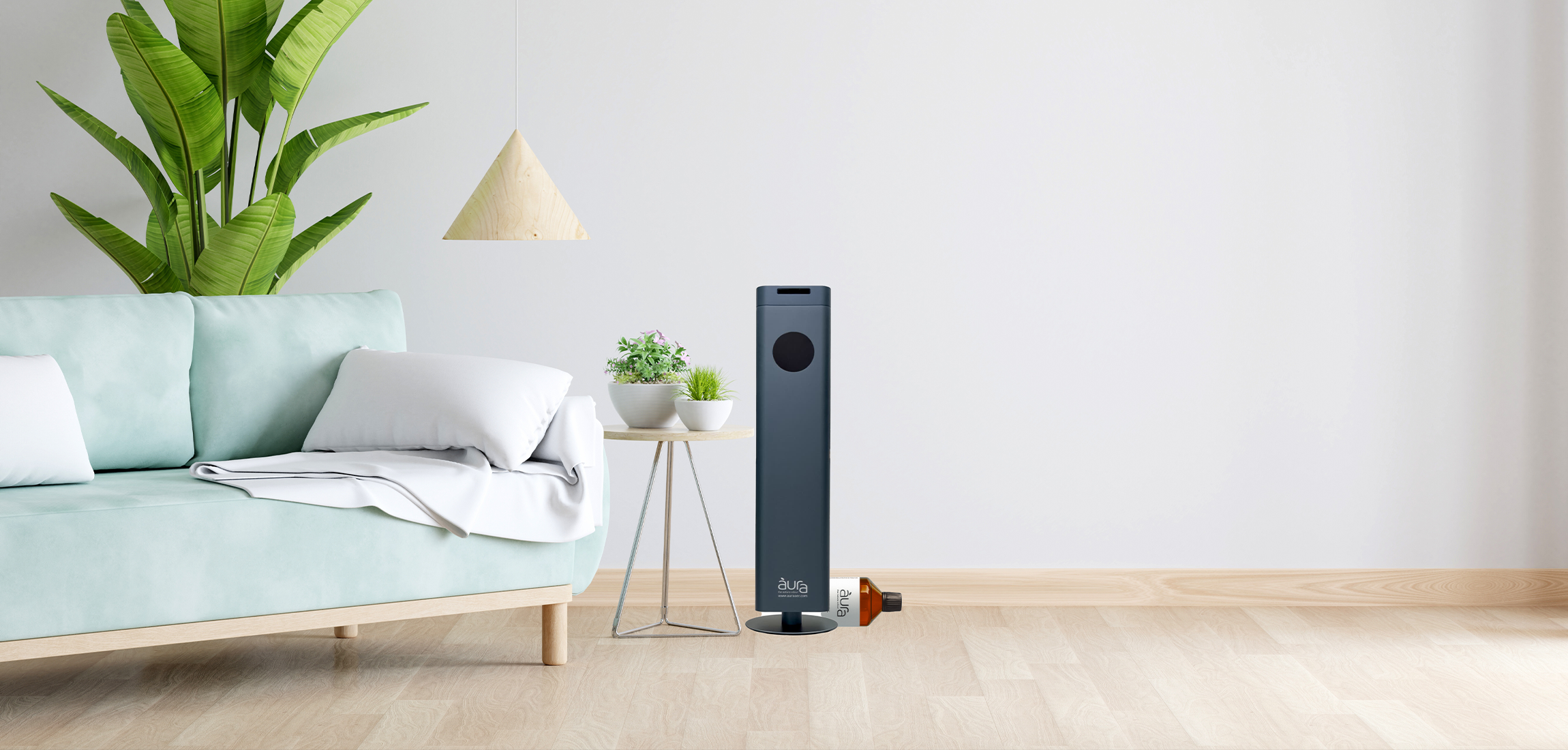
Most people assume all diffusers work the same way. You fill something with water, add a few drops of oil, and it produces scented mist. Job done.
That assumption is why so many people end up disappointed with their diffuser. Not because diffusers don’t work — but because water-based diffusion and cold-air diffusion are fundamentally different technologies that produce completely different results.
If you are considering a diffuser for your UAE home, office, or commercial space — understanding how cold-air diffusion actually works takes about five minutes and saves you from buying the wrong thing entirely.
What Most People Have Tried Before — and Why It Falls Short
The diffuser most people are familiar with is the ultrasonic type. You fill a tank with water, add 5 to 10 drops of essential oil, and the device uses ultrasonic vibrations to break the water into a cool mist that carries the oil into the air.
It looks impressive. The mist is visible, the scent is immediate, and the devices are inexpensive.
But there are three fundamental problems with this approach — and all three are amplified in UAE conditions.
The fragrance is diluted from the start. You are dispersing water with oil in it, not oil itself. The actual fragrance concentration in the air is a fraction of what the oil is capable of delivering. In a small sealed bedroom this is manageable. In a UAE living room with AC running and 3-metre ceilings, the scent disappears before it reaches the other side of the room.
Heat and water change the oil. Ultrasonic vibration generates mild heat. That heat alters the molecular structure of delicate fragrance compounds — particularly top notes, which are the first thing you smell and the first thing to break down under heat exposure. What you end up inhaling is a degraded version of the oil’s true scent profile.
It adds humidity to the air. In a UAE home where air conditioning is managing humidity constantly, a water-based diffuser is working against your AC system. The extra moisture your AC has to remove means higher energy consumption and a less comfortable indoor environment.
Cold-air diffusion solves all three problems simultaneously.
How Cold-Air Diffusion Actually Works
Cold-air diffusion — also called nebulizing diffusion or nano-diffusion — works on a completely different principle. There is no water involved at any stage.
Here is the mechanism step by step.
A small air compressor inside the device generates a pressurised stream of air. That airstream passes through a specially engineered glass or metal atomiser tube containing pure fragrance oil. The physics of the airflow — based on the Bernoulli principle — creates a pressure differential that pulls the oil upward into the airstream and breaks it into particles.
These particles are measured in microns — far smaller than anything produced by water-based diffusion. At this size, the particles are essentially dry. They do not feel wet, they do not add moisture to the air, and they do not settle on surfaces.
They stay suspended in the air.
A single cold-air diffuser running at moderate intensity fills a room with fragrance particles that remain airborne for extended periods — not sitting on your furniture, not evaporating off a wet surface, just suspended in the air you are breathing.
What This Means for the Scent You Actually Experience
The difference in real-world scent experience between cold-air and water-based diffusion is not subtle. It is significant enough that people who have used cold-air diffusion for the first time consistently describe it the same way — it does not smell like a diffuser. It smells like the room just naturally has that fragrance.
There are three reasons for this.
The oil is undiluted. Cold-air diffusion disperses pure fragrance oil with nothing added and nothing removed. The scent profile that reaches your nose is exactly what the perfumer or oil formulator intended — complete top, heart, and base notes in the right proportions.
The coverage is genuine. Because the particles are so fine and dry, they travel with air movement rather than falling or evaporating. In a UAE home where AC is constantly circulating air, cold-air particles distribute with that airflow and reach every corner of the space. A properly sized cold-air diffuser fills its rated coverage area completely — not just the immediate vicinity of the device.
The scent lasts. Water evaporates. Dry micro-particles suspended in air do not evaporate in the same way. The fragrance experience from a cold-air diffuser running on a cycle outlasts the session itself — the particles that were dispersed continue to deliver scent for a significant period after the device switches off.
Why UAE Conditions Make Cold-Air Diffusion the Logical Choice
The UAE indoor environment creates specific conditions that make cold-air diffusion perform better here than anywhere else in the world.
Air conditioning runs almost continuously — which means indoor air is constantly moving through a ventilation system. Cold-air nano-particles integrate with this airflow rather than fighting it. The AC becomes a distribution system for the fragrance, carrying particles to every room and corner that the ductwork serves.
Ceilings in UAE homes and commercial spaces are typically higher than in European or Asian markets — 3 metres is standard, 4 metres is common in villas and commercial spaces. Higher ceilings mean more air volume to fill. Cold-air diffusers are rated by cubic metre coverage for exactly this reason — the coverage accounts for the full three-dimensional volume of the space, not just the floor area.
The dry indoor air produced by air conditioning actually helps cold-air particles stay suspended longer. In humid environments, airborne particles absorb moisture and become heavier, eventually settling. In UAE’s AC-dried indoor air, the particles remain lighter and stay airborne for extended periods.
The Technology Inside AuraAer Diffusers
Every diffuser in the AuraAer range uses cold-air nano-diffusion technology, from the compact Aura Hover covering 200 sq. m to the Aura Hover X2 covering 1,500 sq. m for hotel lobbies and large commercial spaces.
The atomizer components are precision-engineered to produce consistent particle sizes across the full operating range. This consistency matters because particle size directly affects how far the fragrance travels and how long it stays airborne. Cheaper cold-air devices use lower-quality atomisers that produce inconsistent particle sizes — some large enough to settle on surfaces, some fine enough to travel properly. The result is uneven coverage and oil residue on furniture.
Every AuraAer unit also runs on Bluetooth and Wi-Fi app control, not because it is a nice feature, but because cold-air diffusion genuinely benefits from precise scheduling. Running at 30% intensity on a 30 minutes-on / 20 minutes-off cycle delivers a better scent experience than running at full intensity continuously, while using significantly less oil. App control makes that scheduling effortless.
The Technology Inside AuraAer Diffusers
If you currently have any fragrance device at home, candle, spray, or water-based diffuser, do this test.
- Run it for 30 minutes in your living room, then leave the house for an hour. Come back and notice what you smell when you walk back in.
- With a candle or spray, you will smell almost nothing. The fragrance dissipated while you were out.
- With a quality cold-air diffuser, you will walk back into your home and smell the fragrance immediately. The particles dispersed during that 30-minute session are still suspended in the air an hour later.
- That is the difference. And that is why once people switch to cold-air diffusion, they do not go back.
Explore the full range of aromatherapy diffusers and cold-air scent diffusers at AuraAer, built for UAE homes, offices, and commercial spaces.
Frequently Asked Questions About Aromatherapy Diffusers and Aroma Oils
How does a cold-air scent diffuser work?
A cold-air scent diffuser uses a small air compressor to generate pressurized airflow through an atomizer containing pure fragrance oil. The Bernoulli effect pulls the oil into the airstream and breaks it into ultra-fine, dry microparticles measured in microns. These particles stay suspended in the air for extended periods, delivering consistent fragrance without heat, water, or humidity.
What is the difference between cold-air diffusion and ultrasonic diffusion?
Ultrasonic diffusers mix oil with water and use vibration to produce a mist — the oil is diluted, humidity is added to the air, and coverage is limited. Cold-air diffusers use no water — pure oil is atomised into dry nano-particles that travel further, last longer, and preserve the oil’s complete fragrance profile. Cold-air diffusion produces significantly better coverage and scent quality.
Why is cold-air diffusion better for UAE homes?
UAE homes run air conditioning continuously, creating dry, recirculated indoor air with high ceilings and large open spaces. Cold-air nanoparticles integrate with AC airflow for even distribution, add zero humidity to climate-controlled air, and stay airborne longer in dry conditions. The technology is specifically suited to the UAE’s indoor environment in ways water-based diffusion is not.
Does cold-air diffusion leave residue on furniture?
Quality cold-air diffusers with precision atomizers produce particles fine enough to stay fully airborne without settling on surfaces. Oil residue on furniture is typically caused by poorly engineered atomizers producing inconsistently sized particles. AuraAer diffusers use precision-engineered atomization components specifically to prevent surface residue.
How long do cold-air diffuser particles stay in the air?
Cold-air nano-particles remain suspended in indoor air significantly longer than water-based mist — typically continuing to deliver fragrance for 30 to 60 minutes after the device switches off, depending on room size, air movement, and AC intensity. This is why cold-air diffusers are effective on cycle schedules rather than needing to run continuously.
Can cold-air diffusers work with any fragrance oil?
No. Cold-air diffusers require pure, undiluted fragrance oil or essential oil specifically formulated for cold-air atomisation — no water, no carrier oils, no thick resinous bases. Using incompatible oils causes atomiser blockage and inconsistent particle production. Always use oils confirmed compatible with cold-air diffusion systems.