

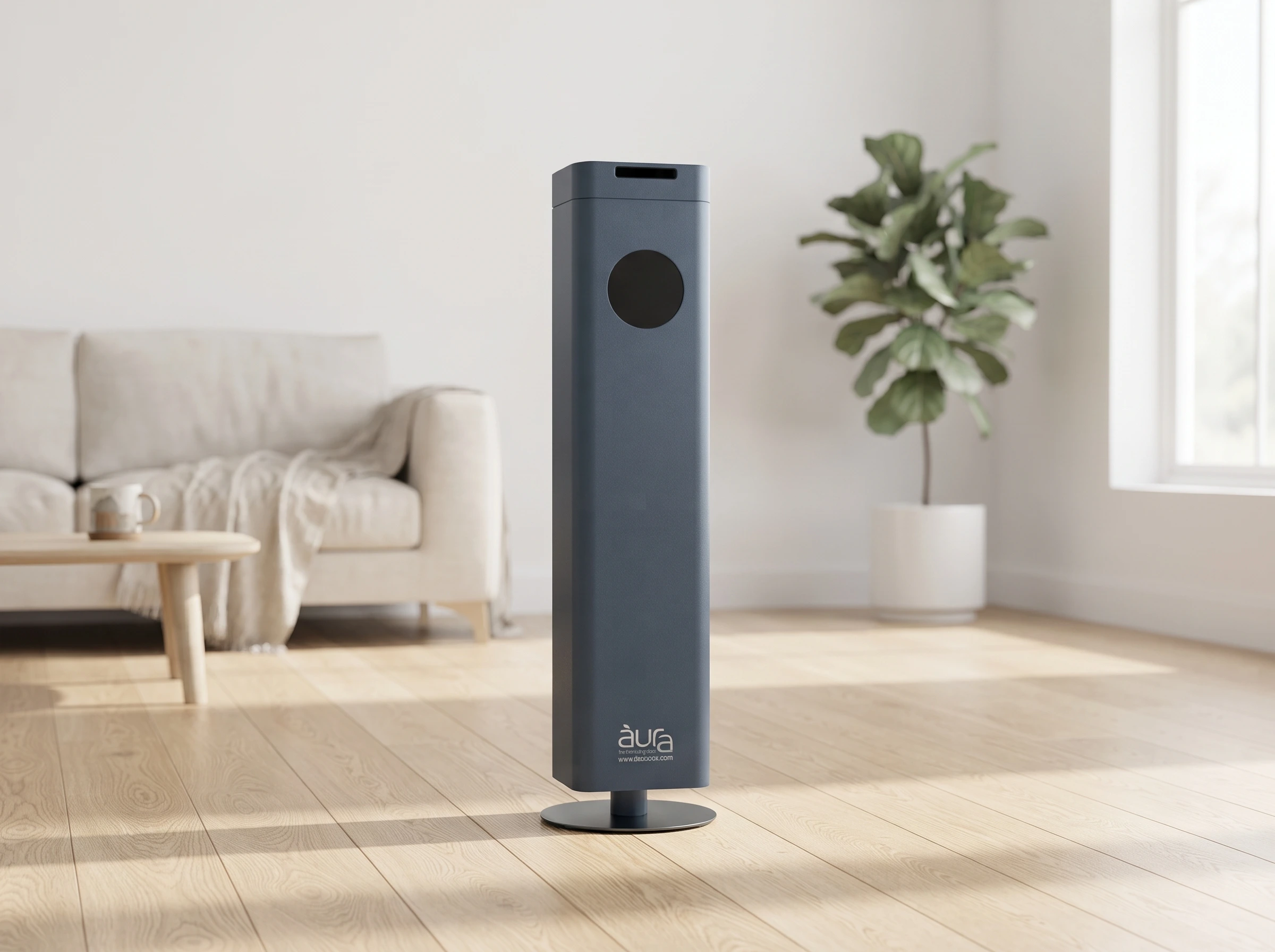
“Electric diffuser” is one of the least useful product labels in home fragrance.
It tells you the device plugs into a wall. It tells you nothing about how the device gets fragrance into the air, which is the only thing that determines whether it will work in your room.
Three completely different technologies sit under that label, and the difference between them is larger than the difference between any two products within the same technology.
What the label covers
Any device that requires power is an electric diffuser. That includes at least three distinct mechanisms.
Ultrasonic devices hold water in a tank with fragrance oil floating on top. A ceramic plate vibrates at a high frequency, breaking the surface into a visible mist. Electric, and by far the most common consumer format.
Heated devices warm oil on a plate or in a well until the aromatic compounds evaporate off the surface. Electric, and effectively a candle without the flame.
Cold air devices use an air pump to force pressurized air through pure oil, shearing it into particles measured in microns with no heat and no water involved. Also electric.
Three mechanisms, one label, and wildly different outcomes from identical oil.
What actually separates them
Particle size, and everything follows from it.
Ultrasonic mist is roughly ninety five percent water by volume. The droplets are large enough to be visible, which means large enough to scatter light, which means heavy enough to settle. In practice most of that mist falls within one to two metres of the device.
Heated diffusion produces vapour rather than droplets, which distributes better than mist. The cost is at the molecular level. Heat alters the lighter aromatic compounds before they leave the device, so the fragrance reaching the room is not the fragrance in the bottle. The opening notes are the first to change.
Cold air diffusion produces dry particles small enough to remain suspended for extended periods. No water to weigh them down, no heat to alter them. They behave closer to a gas than a liquid and travel with air movement rather than falling out of it.
That last property is what decides the outcome in a UAE room.
The air conditioning variable
Coverage figures are almost always established in still air. UAE homes do not have still air for most of the year.
Air conditioning moves indoor air continuously in a directional pattern, from supply vents across the room toward return vents. Any airborne particle is subject to that current.
Heavy mist droplets get caught in it and pulled toward the return before they disperse. The air conditioning actively removes the fragrance from the room. This is why ultrasonic devices that perform acceptably in a small closed European bedroom underperform badly in a Dubai apartment with the AC running.
Light dry particles travel with the current instead. They reach corners and connected zones that still air would never carry them to. The same airflow that defeats one technology distributes the other.
This is not a marginal difference. It is the primary reason two devices with identical coverage ratings on paper produce completely different results in the same UAE room.
Humidity, which nobody thinks about
An ultrasonic device is a small humidifier that happens to carry fragrance.
Running one continuously adds measurable moisture to indoor air. In a temperate climate during winter that can be a benefit. In a UAE home where the air conditioning is actively working to manage humidity, it is a small additional load on a system already doing that job.
The effect is not dramatic for a single device in a large room. It becomes noticeable when several are running, or in a smaller bedroom overnight, where condensation on cooler surfaces occasionally shows up.
Cold air diffusion adds nothing to the air but the fragrance itself, because there is no water in the system at any point.
Maintenance differs more than expected
Water tanks require regular cleaning. Standing water at room temperature in a warm environment supports bacterial and mould growth within days if left, and the device disperses whatever is in the tank into the room.
UAE tap water adds a second issue. Mineral content here is high, and those minerals deposit on the ultrasonic plate over repeated fills. The scale that builds up reduces output progressively, which is often mistaken for the device failing.
Cold air systems have no water, so neither problem exists. They need occasional cleaning of the atomizer with isopropyl alcohol to clear oil residue, which is a five minute job every few weeks rather than an every few days requirement.
Where each one makes sense
Ultrasonic devices suit small enclosed rooms without air conditioning running, where the coverage limitation does not bite and the added humidity is neutral or welcome. They are inexpensive and they work within those conditions.
Heated diffusers suit situations where the fragrance itself is uncomplicated and the alteration of light compounds does not matter much. A simple profile in a small space.
Cold air diffusion suits everything else, and specifically it suits the conditions that describe most UAE homes. Open plan connected spaces, ceilings above three metres, air conditioning running through the operating hours, and an expectation that the whole room is scented rather than the area around the device.
A scent diffuser built on cold air technology is not simply a better version of an ultrasonic device. It is a different mechanism producing a different result, and the choice between them is really a choice about which set of room conditions you are dealing with.
The oil requirement follows from the mechanism. Cold air systems atomise pure undiluted oil directly, which means diffuser oil formulated for atomisation rather than oil intended to be dropped onto water. Using the wrong type is the most common reason a correctly specified cold air device underperforms.
How to tell what you are actually buying
The product description will use the word electric. That is not the information you need.
Look for whether the device has a water tank. If it does, it is ultrasonic and the coverage claim was almost certainly measured in still air.
Look for whether the product mentions heat, a warming plate, or a wax reservoir. If so, it is a heated system.
Look for terms like nebulising, waterless, cold air, or pressurised air. Those describe the mechanism that produces suspended dry particles.
If the description does not say, the tank question resolves it. Water means ultrasonic. No water and no heat means cold air.
Frequently Asked Questions
What is the difference between an electric diffuser and a cold air diffuser?
“Electric diffuser” describes the power source rather than the technology and covers at least three different mechanisms. Ultrasonic devices vibrate water and oil into a visible mist. Heated devices warm oil until it evaporates. Cold air devices use pressurised air to break pure oil into dry particles measured in microns, with no water and no heat. All three are electric, but they produce very different particle sizes and therefore very different coverage.
Why do ultrasonic diffusers underperform in UAE homes?
Because the mist they produce is roughly ninety five percent water and heavy enough to settle within one to two metres of the device. UAE homes run air conditioning continuously, which moves air directionally from supply vents toward return vents. That current catches the mist and draws it out of the room before it disperses. Cold air particles are light enough to travel with the same airflow rather than being removed by it.
Does an ultrasonic diffuser add humidity to a room?
Yes. An ultrasonic diffuser is essentially a small humidifier that carries fragrance, since the vast majority of what it disperses is water. In a UAE home where air conditioning is already managing humidity, this adds a small additional load. The effect is minor with one device in a large room but becomes noticeable with several running or in a small bedroom overnight.
Do cold air diffusers require more maintenance than ultrasonic ones?
Less. Ultrasonic devices need frequent water tank cleaning, since standing water supports bacterial growth within days, and UAE tap water leaves mineral deposits on the ultrasonic plate that progressively reduce output. Cold air systems have no water, so neither issue applies. They need the atomiser cleaned with isopropyl alcohol every few weeks to clear oil residue, which is a short task rather than a recurring chore.
How do I tell which technology a diffuser uses?
Check whether it has a water tank. If it does, it is ultrasonic. If the description mentions heat, a warming plate, or a wax reservoir, it is a heated system. Terms including nebulising, waterless, cold air or pressurised air indicate a cold air mechanism. The word electric appears on all three and tells you nothing useful about which one you are looking at.