

Five years ago, home fragrance in the UAE meant one of three things. Bakhoor for occasions. A reed diffuser in the bathroom. A can of air freshener under the sink for emergencies.
That was the whole category for most households. Fragrance was either ceremonial or corrective. It marked a gathering, or it fixed a problem.
The way UAE homes are scented today looks almost nothing like that, and the change happened faster here than in most markets.
What actually changed
The shift was not driven by fragrance itself. It was driven by how much time people started spending inside their homes.
When work moved into apartments and villas, the home stopped being a place people passed through between commitments. It became an office, a school, a gym, and a living space simultaneously. People occupied their homes for ten and twelve hour stretches and started noticing things they had previously moved past too quickly to register.
One of those things was that the air was completely neutral.
A sealed, air conditioned UAE interior has almost no sensory character. Temperature is constant. Airflow is constant. Light is largely artificial. And any smell that stays constant disappears from perception within the first hour through olfactory adaptation.
For years that neutrality went unnoticed because nobody was in the room long enough to notice it. Once people were, the gap became obvious.
From corrective to intentional
The clearest signal of the shift is what people are trying to achieve.
The old category was corrective. Something smells wrong, so you spray something. The trigger was a problem, and the goal was to return the room to neutral.
The current category is intentional. Nothing is wrong. The goal is for the space to feel a specific way at a specific time of day.
That is a completely different purchase decision. Corrective fragrance is bought reactively, cheaply, and without much thought about the product. Intentional fragrance is bought as part of how someone designs their environment, alongside lighting and furniture, and it gets the same consideration.
This is why home fragrance has moved from the cleaning aisle mindset into something closer to interior design. The category is not selling a fix anymore. It is selling a property of the space.
The technology moved from commercial to residential
For most of the last decade, the equipment capable of scenting a full room properly was commercial only.
Hotels in Dubai have used cold air diffusion integrated with air handling systems for years. That technology produced results residential products could not match, because the mechanism was different. Dry particles measured in microns, distributed through the building’s own airflow, reaching every corridor and lobby corner consistently.
Residential options were water based devices producing visible mist that settled within a metre or two, or passive reed diffusers that scented the immediate area around the bottle.
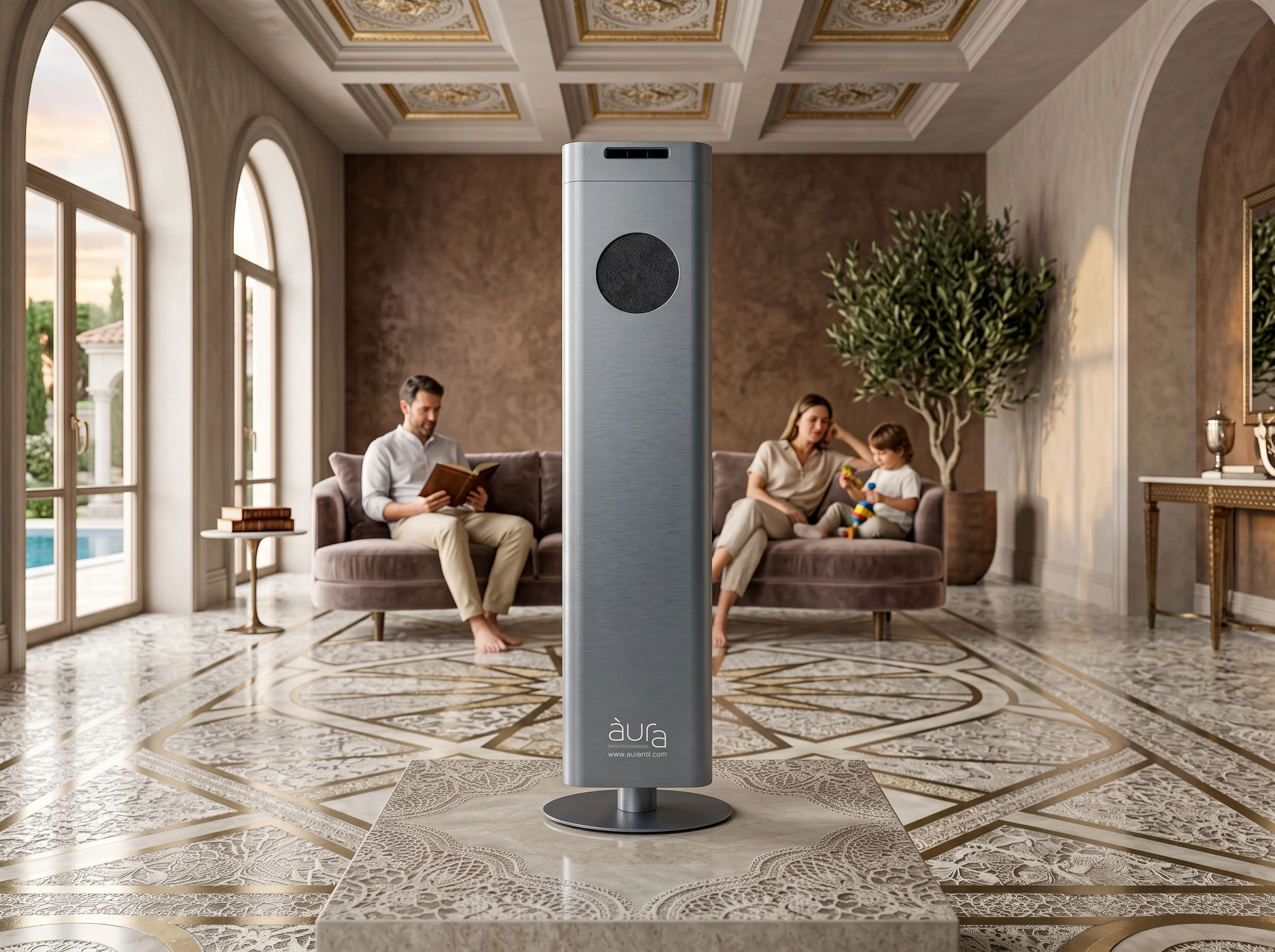
The gap closed when cold air diffusion appeared in residential form factors. The same mechanism, scaled to a room rather than a building. A properly sized scent diffuser in a UAE living room now produces the kind of even ambient coverage that used to require a commercial installation.
That availability is a large part of why expectations rose. People had experienced what a properly scented space feels like in hotels. Once the technology became accessible, the standard for what a home should feel like moved with it.
The UAE market moved differently from others
Three conditions made this shift sharper here than in most markets.
The first is the sealed environment. Five months a year with windows closed and air conditioning running continuously means UAE homes have less natural sensory variation than homes almost anywhere else. That makes deliberately introduced fragrance more noticeable and more valuable, because there is nothing competing with it.
The second is fragrance literacy. Per capita fragrance spending in the UAE is among the highest globally. This is a market where people already understand scent, already have preferences, and already notice quality differences. That baseline sophistication meant the home fragrance category did not need educating from scratch. It needed better products.
The third is hospitality culture. Receiving guests well is not a lifestyle preference in the Gulf, it is an expectation, and how a home smells when someone walks in is part of that. Fragrance was already culturally significant through bakhoor and oud. What changed was extending that significance from the occasion to the everyday.
Where the category is now
The current picture in a well set up UAE home looks something like this.
Multiple devices rather than one, because different rooms have different purposes and different air volumes. Scheduled operation rather than manual, because consistency is what produces the effect and nobody sustains a manual habit for months. Different fragrances for different times of day, because the requirements of a morning and an evening are not the same.
Bakhoor has not disappeared from any of this. It has moved into a clearer role, reserved for occasions where it belongs rather than being the only tool available. The everyday character of the home is handled by something built for continuous ambient use.
That separation of roles is probably the clearest marker of how far the category has come. Five years ago there was one option and it was used for everything. Now there is a set of tools and people are matching them to purposes.
What has not changed
The underlying reason any of this works is unchanged and predates all of it.
Scent reaches the brain regions governing emotion and memory more directly than any other sense. A space that smells a specific way consistently becomes associated with a specific feeling in everyone who spends time in it. Children remember it decades later. Guests recognise it elsewhere and think of the house.
That mechanism has always been the point of bakhoor. It is the point of a signature hotel scent. And it is the point of a diffuser running quietly in a living room at seven in the evening.
The technology changed. The market changed. What people are actually reaching for has not moved at all.
Frequently Asked Questions
How has home fragrance in the UAE changed recently?
The category shifted from corrective to intentional. Fragrance used to be either ceremonial, through bakhoor at gatherings, or corrective, through air fresheners, fixing a problem. It is now bought as part of how people design their living environment, alongside lighting and furniture. The main drivers were people spending far longer inside their homes and cold air diffusion technology becoming available in residential form after years of being commercial only.
Why is home fragrance more noticeable in UAE homes than elsewhere?
UAE homes are sealed for roughly five months a year with air conditioning running continuously. Temperature, airflow and light stay constant, which means there is very little natural sensory variation competing with an introduced fragrance. In a naturally ventilated home, outdoor air and changing conditions provide constant sensory input. In a sealed interior, a deliberately chosen scent is often the only environmental variable present.
Is bakhoor still relevant with modern diffusers available?
Yes, and its role has become clearer rather than diminished. Bakhoor produces an intense, short lived experience with smoke as part of the effect, which suits occasions, guest arrivals and gatherings. Continuous ambient scenting suits the everyday character of a home. Most well set up UAE homes now use both for different purposes rather than treating one as a replacement for the other.
What technology do UAE homes use for fragrance now?
Cold air diffusion has become the standard for ambient home scenting. It uses pressurised air to break pure fragrance oil into particles measured in microns, with no water and no heat. Those dry particles travel with air conditioning airflow rather than being pulled out of the room by it, which is why the technology suits UAE interiors specifically. It is the same mechanism used in commercial hotel installations, scaled for residential rooms.
How many diffusers does a UAE home typically need?
Most homes use two to four depending on layout. A living area, a bedroom, and often an entrance, with a home office added where relevant. The reason is that rooms have different air volumes and different purposes at different times of day. A single device positioned centrally covers the space around it rather than the whole property, particularly in the open plan layouts and higher ceilings common in UAE apartments and villas.