

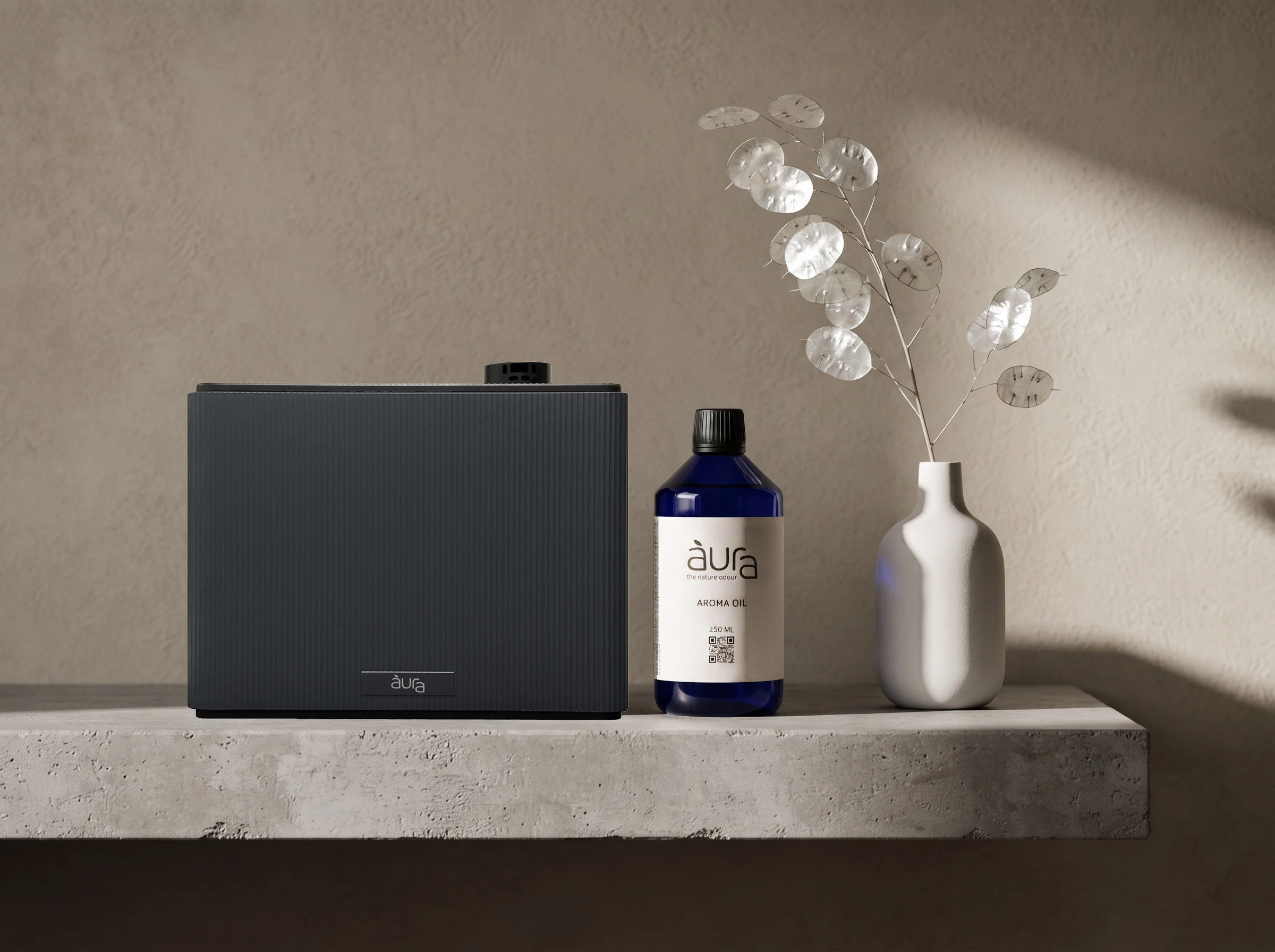
Walk into any pharmacy or health store in Dubai and you will find a wall of essential oil bottles. Lavender from France. Eucalyptus from Australia. Peppermint from Morocco. Tea trees from everywhere. Rose absolute with a price tag that makes you look twice.
Most of them have no clear guidance about whether they will actually work in a diffuser. Some of them will not. A few will damage your device over time if used incorrectly. And several will produce a completely different result in the sealed, air-conditioned indoor environment of a UAE home than the same oil would produce in the naturally ventilated European or American context most online advice is written for.
This is the guide that explains the difference.
What Essential Oils Actually are, and Why It Matters for Diffuser Use
Essential oils are concentrated aromatic extracts derived directly from plant material through steam distillation, cold pressing, or solvent extraction. The lavender oil in a bottle is the actual aromatic compounds from lavender flowers, captured and concentrated. The eucalyptus oil is eucalyptol and other compounds extracted directly from eucalyptus leaves.
This is different from fragrance oils, which are synthetic or blended aromatic compounds formulated to smell like something rather than extracted from it. Both have their place. But they behave differently in a cold-air diffuser, and understanding that difference matters before you buy.
Pure essential oils, when correctly matched to the diffuser technology, produce two things simultaneously. An ambient scent experience. And a genuine interaction between their active aromatic compounds and the olfactory system and nervous system of the people in the room.
The linalool in lavender essential oil interacts with GABA-A receptors in the brain. The 1,8-cineole in eucalyptus and rosemary crosses the blood-brain barrier and affects neurotransmitter pathways. The incensole acetate in frankincense activates limbic brain regions associated with emotional regulation. These are specific molecular interactions documented in peer-reviewed research. They depend on the active compounds arriving at the olfactory receptors intact and at meaningful concentrations.
Cold-air diffusion is the only residential diffusion method that delivers essential oils intact at ambient temperature. No heat degradation. No water dilution. The compound that leaves the bottle is the compound that reaches the room.
This is why the choice of essential oil matters more in a cold-air diffuser than in any other delivery system. The diffuser preserves whatever you put into it, including both the quality and the flaws.
The Essential Oils That Work Well in UAE Cold-Air Diffusers
Not every essential oil is suitable for cold-air atomization. The ones that work share two characteristics: they are within the viscosity range that cold-air atomizers handle effectively, and their aromatic compounds are stable at ambient temperature and disperse well as dry particles.
Lavender
The most documented essential oil for diffuser use in the wellness context. Standard lavender (Lavandula angustifolia, also called true lavender or English lavender) has a linalool content typically between 25 and 50 percent depending on the growing region and altitude. Bulgarian and French highland varieties consistently produce the highest linalool concentrations.
In a UAE home, lavender in a cold-air diffuser at 20 to 25 percent intensity in the bedroom for 90 minutes before sleep addresses cortisol-driven sleep disruption through a documented neurochemical mechanism. It is also one of the lightest, most freely flowing essential oils, which makes it ideal for cold-air atomization with no viscosity concerns.
What to avoid: lavandin (Lavandula x intermedia), which is a lavender hybrid with a camphor-heavy profile that smells sharper and has significantly different therapeutic properties from true lavender. It is common, inexpensive, and widely mislabeled as lavender in cheaper oil ranges.
Eucalyptus
Eucalyptus globulus and Eucalyptus radiata are both excellent for cold-air diffusion. Globulus has a higher 1,8-cineole content (typically 60 to 80 percent) and a stronger, more medicinal character. Radiata has a slightly softer profile that some people find more comfortable for extended diffusion.
In the UAE specifically, eucalyptus is the most practically useful daily-use essential oil because it addresses the respiratory discomfort that sealed, continuously air-conditioned indoor environments produce. The eucalyptol content interacts with cold receptors in the nasal passage and airways, producing the subjective experience of easier, clearer breathing. In a sealed Dubai apartment where the air is consistently dry and recirculated, this is a genuine daily benefit rather than an occasional wellness choice.
Rosemary
Research from Northumbria University documented statistically significant improvements in memory performance and mental speed in rosemary-scented environments compared to unscented controls. The active compound, 1,8-cineole (shared with eucalyptus but at different concentrations), crosses the blood-brain barrier and inhibits acetylcholinesterase, prolonging the availability of acetylcholine in the brain.
For UAE residents working from home, a rosemary essential oil in the home office diffuser at 20 to 25 percent intensity during focused work sessions is the most evidence-supported cognitive performance intervention available in the home fragrance category.
Rosemary is also one of the most freely flowing essential oils, making it well suited to cold-air atomisation without any viscosity concerns.
Bergamot
Bergamot essential oil (from Citrus bergamia) has a linalool content typically between 11 and 22 percent and a limonene content of 27 to 52 percent. The combination produces calming effects without sedation, making it uniquely useful for the post-work wind-down window in the evening when you want to decompress without pushing toward sleep.
One important note for UAE buyers: bergamot essential oil pressed from the rind of the fruit is phototoxic, meaning it can cause skin reactions when applied to skin and exposed to sunlight. For diffuser use, this is not relevant because the oil is not applied to skin. But when purchasing, look for either FCF (furanocoumarin-free) bergamot if you also intend to use it topically or standard bergamot if diffuser use only is the intention.
Frankincense
Boswellia serrata and Boswellia carterii are the two varieties most commonly available in UAE markets. Both contain incensole acetate, the compound associated with anxiolytic and antidepressant effects in research, and both produce the immediate respiratory deepening effect that Gulf residents associate with the traditional use of frankincense in homes and sacred spaces across the region.
Frankincense essential oil is slightly more viscous than lavender or eucalyptus but well within the range that cold-air atomizers handle without difficulty at standard blend concentrations. It disperses well, and the base note character of the oil means it persists in the room during the off cycle of a scheduling program, maintaining ambient presence between sessions.
Peppermint
The menthol content of peppermint essential oil (typically 35 to 55 percent) produces the alertness and anti-fatigue effects documented across multiple studies. It is most useful in short exposures during morning sessions or before high-stakes work periods rather than as an all-day background oil.
Peppermint is completely free-flowing and one of the easiest essential oils to atomize in a cold-air diffuser. It disperses quickly and fills a space with immediate presence. At low intensity it provides a clean, energizing quality to indoor air without being medicinal or overpowering.
The Essential Oils That Cause Problems in Cold-Air Diffusers
Resinous and highly viscous oils
Benzoin, myrrh, pure vetiver, and raw oud resin are all too viscous for direct cold-air atomization at full concentration. They do not break into microparticles effectively and gradually coat the atomizer mechanism with a film of heavy residue that reduces performance over time.
If you want these aromatic profiles in your cold-air diffuser, use professionally formulated blends that incorporate these notes at viscosities calibrated for cold-air systems rather than the raw essential oils directly.
Absolutes
Rose absolute, jasmine absolute, and similar products produced through solvent extraction rather than steam distillation contain residual solvent compounds and have viscosity profiles that are generally outside the range suitable for cold-air atomization. Steam-distilled rose otto (which is significantly more expensive than rose absolute) is suitable for cold-air diffusion. Rose absolute is not.
Carrier oil dilutions
This is the most common mistake UAE buyers make when purchasing essential oils for diffuser use. Many essential oils sold in pharmacies and health stores are pre-diluted in carrier oils—almond oil, jojoba, and fractionated coconut oil—for safe topical application. These carrier oils do not atomize in a cold-air system. They coat the atomizer with a fatty film that gradually blocks the mechanism.
The test: tilt the bottle and watch how the oil moves. A pure essential oil flows freely and quickly. A carrier oil dilution moves more slowly and leaves a clear greasy film. Do not put carrier oil dilutions in a cold-air diffuser regardless of how the essential oil itself is listed on the label.
Where to Buy Quality Essential Oils in UAE
The UAE essential oil market ranges from genuine high-quality botanical extracts to synthetic fragrance oils labelled as essential oils. Several indicators help distinguish them before purchase.
What to look for
Latin name on the label. A quality essential oil specifies the exact botanical species: Lavandula angustifolia, not simply lavender. This matters because different species have different compound profiles and therefore different effects.
Country of origin. Lavender from Bulgarian highlands or Provence. Eucalyptus from Australia. Frankincense from Oman or Somalia. Provenance affects compound concentration and quality.
GC-MS testing. Gas chromatography mass spectrometry testing confirms the actual compound profile of the oil. Reputable suppliers make this available on request or publish it on their website. It is the only way to verify that the linalool percentage in lavender oil actually matches what therapeutic use requires.
Price as a rough guide. Pure rose otto is genuinely expensive because the yield from rose petals is extremely low. A rose essential oil priced similarly to lavender is almost certainly rose absolute or synthetic rose fragrance rather than steam-distilled rose otto.
Where to find them in UAE
Health and organic stores across Dubai and Abu Dhabi typically carry a range of essential oils with reasonable botanical labelling. Pharmacies carry standard oils including eucalyptus, lavender, and peppermint from established international brands. Specialty fragrance shops in traditional souks carry Gulf-origin oils including genuine Omani frankincense and oud-adjacent resins, though quality and purity vary considerably.
For diffuser-specific use, AuraAer’s diffuser oil range is formulated specifically for cold-air atomisation and tested for UAE indoor conditions — the viscosity, compound concentration, and fragrance architecture of each oil is calibrated for the diffuser technology rather than for topical or general aromatherapy use. This removes the compatibility uncertainty that comes with using general market essential oils in a precision cold-air diffuser system.
How to Use Essential Oils in a UAE Cold-Air Diffuser
Start undiluted. Cold-air diffusers are designed for undiluted oil. Do not add water. Do not dilute with a carrier oil before filling the reservoir. Pure essential oil goes directly into the tank.
Begin at low intensity. Essential oils in cold-air diffusion are more concentrated than in water-based systems. Start at 15 to 20 percent intensity in the UAE sealed indoor environment and adjust upward only if the coverage feels insufficient after a full cycle.
Use cycle scheduling. The olfactory adaptation issue applies equally to essential oils and fragrance oils. Run 25 minutes on and 15 minutes off. Your nose resets during the off period, and the oil registers freshly when the next cycle starts. Continuous operation at any intensity produces diminishing perception after the first 20 minutes.
Clean the atomizer when switching oils. Running isopropyl alcohol through the device for five minutes between significantly different oil profiles prevents the residual character of the previous oil from mixing with the new one and producing an unintended blend.
Store correctly. Essential oils oxidize when exposed to heat, light, and air. Store bottles sealed in a cool location away from sunlight. UAE summer ambient temperatures accelerate oxidation in any oil left near a window or in a warm room. Oxidized oils smell flat or sharp and have degraded compound profiles that reduce both the fragrance experience and any therapeutic effect.
Frequently Asked Questions
What essential oils work best in a diffuser in UAE?
Lavender, eucalyptus, rosemary, bergamot, frankincense, and peppermint all perform well in cold-air diffusers in UAE homes. They fall within the viscosity range that cold-air atomizers handle effectively, and their active compounds disperse well as dry particles. Eucalyptus is particularly relevant in the UAE because its eucalyptol content addresses respiratory discomfort caused by the dry, continuously recirculated air of sealed AC-managed indoor environments.
Can I use any essential oil in a cold-air diffuser?
No. Highly viscous oils, including benzoin, myrrh, pure vetiver, and raw oud resin, are too thick for cold-air atomization at full concentration and gradually block the atomizer mechanism. Absolutes produced through solvent extraction have viscosity and residual compound profiles that are unsuitable for cold-air systems. Carrier oil dilutions coat the atomizer with fatty residue. Only pure essential oils within a suitable viscosity range should be used in a cold-air diffuser.
How do I know if an essential oil is pure or diluted in UAE?
Tilt the bottle and observe the oil’s movement. Pure essential oils flow freely and quickly, leaving no greasy film. Carrier oil dilutions move more slowly and leave a visible fatty residue. Also check the label for the Latin botanical name, country of origin, and whether GC-MS testing documentation is available. A supplier who cannot provide botanical details or testing documentation is unlikely to be selling genuinely pure essential oils.
Are essential oils from UAE pharmacies suitable for diffusers?
Most pharmacy essential oils in the UAE are suitable for cold-air diffuser use provided they are pure essential oils without carrier oil dilutions. Check for the botanical name on the label and verify the oil flows freely without leaving greasy residue. Standard pharmacy brands carrying eucalyptus, lavender, and peppermint from established international producers are generally reliable for diffuser use.
How much essential oil should I put in my cold-air diffuser?
Follow the manufacturer’s guidance for your specific device—most cold-air diffuser reservoirs accommodate between 100 ml and 500 ml of oil. The device controls intensity through atomizer output rather than oil volume in the reservoir. Fill the reservoir to the indicated level and manage the scent experience through intensity settings at 15 to 30 percent in standard UAE room sizes rather than by varying the amount of oil in the tank.
Why do essential oils smell different in a UAE home than in a shop?
Two factors explain most of this difference. First, the sealed AC-managed indoor environment of a UAE home affects how different aromatic compounds disperse and persist in the air compared to the variable or naturally ventilated conditions of a retail environment. Top note compounds clear faster in high-AC-exchange indoor air. Base notes persist longer. Second, cold-air diffusion disperses the oil at ambient temperature with no heat modification, which means the compound profile that reaches your nose is faithful to the actual oil rather than a heat-altered version of it.