

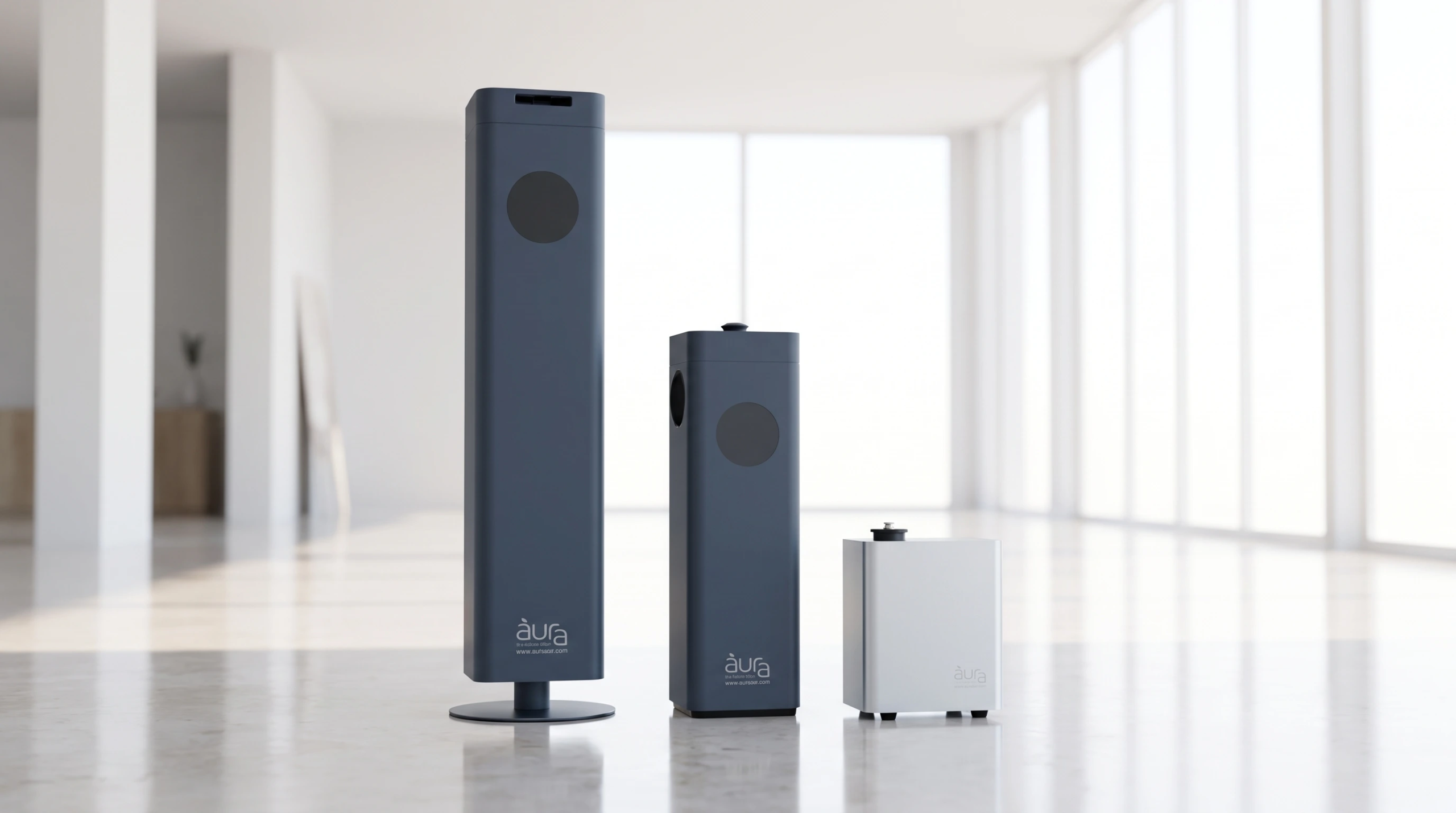
Most people who start using an aromatherapy diffuser every night are not thinking about physiology.
They are thinking about whether the bedroom will smell nice. Whether it might help them fall asleep a little faster. Whether it is a pleasant addition to a bedtime routine rather than something with a measurable effect on the body.
What actually happens over weeks of consistent nightly use is more specific than most people expect, and it happens in a fairly predictable sequence. Not because aromatherapy is magic. Because it interacts with documented biological mechanisms that respond differently depending on whether the exposure is occasional or consistent.
Here is what actually changes in the body across the first month of nightly aromatherapy diffuser use, broken down by what is happening at each stage.
Night One to Seven, The Immediate Physiological Response
In the first week, what happens is purely pharmacological. The oil interacts with specific receptors, and the body responds within minutes, regardless of whether this is the first time or the hundredth.
For lavender specifically, the compound linalool binds to GABA-A receptors in the brain. GABA is the primary inhibitory neurotransmitter in the central nervous system, meaning its job is to reduce neural excitability. A 2018 study published in Frontiers in Behavioral Neuroscience examined linalool’s interaction with GABA receptors and found it produced anxiolytic effects through this pathway without the sedative side effects associated with pharmaceutical GABA agonists like benzodiazepines.
In practical terms, within the first ten to fifteen minutes of exposure, heart rate variability typically shifts toward a pattern associated with parasympathetic activation. This is measurable with consumer heart rate monitors, not just clinical equipment, which is part of why aromatherapy’s physiological effects have become easier to verify outside laboratory settings in recent years.
During this first week, the effect is entirely dependent on the specific session. There is no carryover. Skip a night and the body responds exactly as it did the very first time the diffuser ran. This is the pharmacological layer, and it is consistent and predictable from day one.
Nights Eight to Fourteen, The Beginning of Conditioning
This is where something different starts happening, and it is the part most people are unaware of even as they experience it.
The brain is constantly building associations between sensory inputs and outcomes. When a specific scent is reliably paired with the transition to sleep, night after night, the nervous system begins to treat the scent itself as a predictive signal. Before any pharmacological effect has had time to act, the scent alone starts triggering anticipatory changes in physiological state.
This is a form of classical conditioning, the same mechanism documented in a wide body of behavioral research dating back over a century, applied specifically to olfactory cues. A 2021 paper in the journal Chemical Senses examined conditioned responses to ambient scent in sleep environments and found that participants exposed to a consistent scent paired with sleep onset over a two week period showed measurable reductions in sleep latency, the time it takes to fall asleep, that exceeded what the pharmacological effect of the scent alone would predict.
In practice this means that by the second week of consistent use, the relaxation response to your bedroom diffuser starts happening faster than it did in week one. Not because the oil has changed. Because your nervous system has started recognizing the scent as a reliable signal that sleep is coming, and has begun preparing for it slightly ahead of schedule.
Night Fifteen to Twenty One Sleep Architecture Changes
By the third week, the effects extend beyond sleep onset into the structure of sleep itself for many people.
Sleep architecture refers to the pattern and proportion of different sleep stages across the night, including deep slow-wave sleep and REM sleep. Chronic sleep disruption, including the kind caused by elevated evening cortisol, tends to reduce time spent in deep sleep stages and fragment sleep with more frequent awakenings.
Research on lavender and sleep architecture specifically, including a frequently cited study from Wesleyan University examining lavender’s effect on sleep quality, found increases in the percentage of slow-wave sleep, the deepest and most physically restorative sleep stage, among participants using lavender consistently compared to a no-scent control condition. The effect was more pronounced with sustained use than with single-night exposure, which is consistent with the conditioning layer building on top of the pharmacological one described above.
This is also typically when people using an aromatherapy diffusers report noticing fewer middle-of-the-night awakenings, even though they cannot point to a specific reason why. The reduction in cortisol-driven sleep fragmentation, combined with the conditioned relaxation response, compounds over these three weeks in a way that single-night use never reveals.
Week Four Onward. The Established Pattern
By around day twenty-eight, most of what is going to develop has developed. The pattern at this point is fairly stable and tends to persist as long as the habit continues.
What this looks like physiologically: lower baseline evening cortisol on nights the diffuser runs compared to nights it does not, faster subjective sleep onset, a higher proportion of slow-wave sleep, and a conditioned relaxation response that triggers within the first few minutes of the scent being present rather than requiring the full pharmacological window to take effect.
There is also a secondary effect that emerges around this point that is rarely discussed. Consistent nightly aromatherapy use appears to function as what sleep researchers call a sleep hygiene anchor, a fixed environmental cue that reinforces the broader bedtime routine. The diffuser starting becomes a signal not just for the body to relax but for the mind to disengage from the day, similar in function to dimming lights or putting away a phone, except that scent operates through a faster and more direct neural pathway than either of those visual cues.
What Happens If You Stop
This is worth addressing honestly because it affects how people think about the habit.
The pharmacological effects of the oil itself are not cumulative in a way that produces lasting change after stopping. If you stop using the diffuser, the receptor-level interactions stop with it. There is no withdrawal effect because nothing addictive is occurring at a chemical level.
The conditioned response is different. Conditioning built over weeks does not disappear immediately, but it does extinguish gradually without reinforcement, typically over a similar timeframe to how long it took to establish, according to general principles of conditioned response extinction documented across behavioral psychology research. A person who stops after a month of nightly use will likely retain some of the faster sleep onset and conditioned relaxation response for one to two weeks before it fades back toward baseline.
This is not a reason to avoid stopping if circumstances require it, such as travel. It simply explains why people who restart the habit after a break often report that the effect returns faster the second time than it took to establish initially. The neural pathway has been used before and is easier to re-establish than to build from nothing
Which Oils Produce Which Effects Over This Timeline
The specific timeline above is most documented for lavender, which has the deepest body of sleep-specific research. Other oils commonly used in nightly aromatherapy routines follow similar general patterns but with different emphases.
Cedarwood contains cedrol, a compound studied for its association with increased time in deep sleep specifically, somewhat independent of the anxiety-reduction pathway that lavender works through. It is commonly blended with lavender for this reason, addressing two slightly different aspects of sleep quality simultaneously.
Roman chamomile has a gentler initial pharmacological effect than lavender but a comparably strong conditioning response over the two- to three-week window, making it a reasonable alternative for people who find lavender’s scent profile too strong for consistent nightly use.
Bergamot is not typically used as a primary night oil because its mechanism leans toward mood elevation rather than sedation, but some people use it in the early evening as part of a broader wind-down sequence that transitions to lavender or cedarwood closer to actual bedtime.
What This Means Practically
If you are starting a nightly aromatherapy routine expecting an immediate dramatic transformation, the honest expectation to set is different from that.
Week one is pharmacological and real, but modest. Week two is where conditioning begins layering on top of the chemistry. Week three is typically where sleep architecture changes become noticeable to the person experiencing them, even if they cannot articulate the mechanism. Week four onward is where the full effect, combining chemistry and conditioning, becomes the new baseline.
This is also why consistency matters more than any single high-intensity session. Running the diffuser at maximum intensity for one night will not replicate what four consistent weeks at moderate intensity produces. The body is not responding to a single large dose. It is learning a pattern, and patterns require repetition to establish.
Frequently Asked Questions
What happens to your body when you use an aromatherapy diffuser every night?
In the first week, the active compounds interact directly with receptors such as GABA-A, producing measurable reductions in physiological stress markers within minutes of each session. By the second week, a conditioned response begins forming where the scent itself triggers anticipatory relaxation before the chemical effect takes hold. By the third week, many people experience changes in sleep architecture, including increased deep sleep. By around four weeks, the combined effect becomes a stable baseline pattern.
Does aromatherapy lose effectiveness if you use it every night?
No, the opposite tends to occur. Unlike substances that build tolerance, aromatherapy compounds such as linalool in lavender do not produce diminishing receptor response with repeated nightly use at the pharmacological level. What does change is the conditioning layer, which strengthens rather than weakens with consistent use, meaning the relaxation response typically becomes faster and more reliable over the first several weeks rather than less effective.
How long does it take for nightly aromatherapy to improve sleep?
Some pharmacological effect is present from the very first night, but the more substantial changes develop over two to four weeks. Conditioned relaxation responses begin forming around the second week. Measurable changes in sleep architecture, including increased deep sleep stages, are typically reported around the third week of consistent nightly use based on existing sleep research on lavender specifically.
What happens if you stop using an aromatherapy diffuser after using it nightly for a month?
The direct pharmacological effects stop immediately since there is no addictive or withdrawal mechanism involved. The conditioned relaxation response built up over weeks of pairing the scent with sleep onset fades gradually rather than disappearing instantly, typically persisting for one to two weeks before returning to baseline. Restarting the habit later tends to re-establish the effect faster than it took to build originally.
Which oil is best for nightly use to improve sleep over time?
Lavender has the most extensive sleep-specific research history, including documented effects on both sleep onset and sleep architecture. Cedarwood is often blended with lavender for its association with increased deep sleep specifically. Roman chamomile offers a gentler scent profile with a comparable conditioning response for people who find lavender too strong for consistent nightly exposure.
Is it safe to run an aromatherapy diffuser every single night long term?
Cold-air aroma diffusers at moderate intensity with quality oil is generally considered safe for nightly long-term use by healthy adults, with no documented tolerance buildup requiring increasing doses over time. As with any consistent exposure, individuals with respiratory sensitivities or specific medical conditions should introduce nightly use gradually and at lower intensity and consult a healthcare provider if any concerns arise.